
Does Shilajit Contain Heavy Metals? The Chemistry Behind the Question
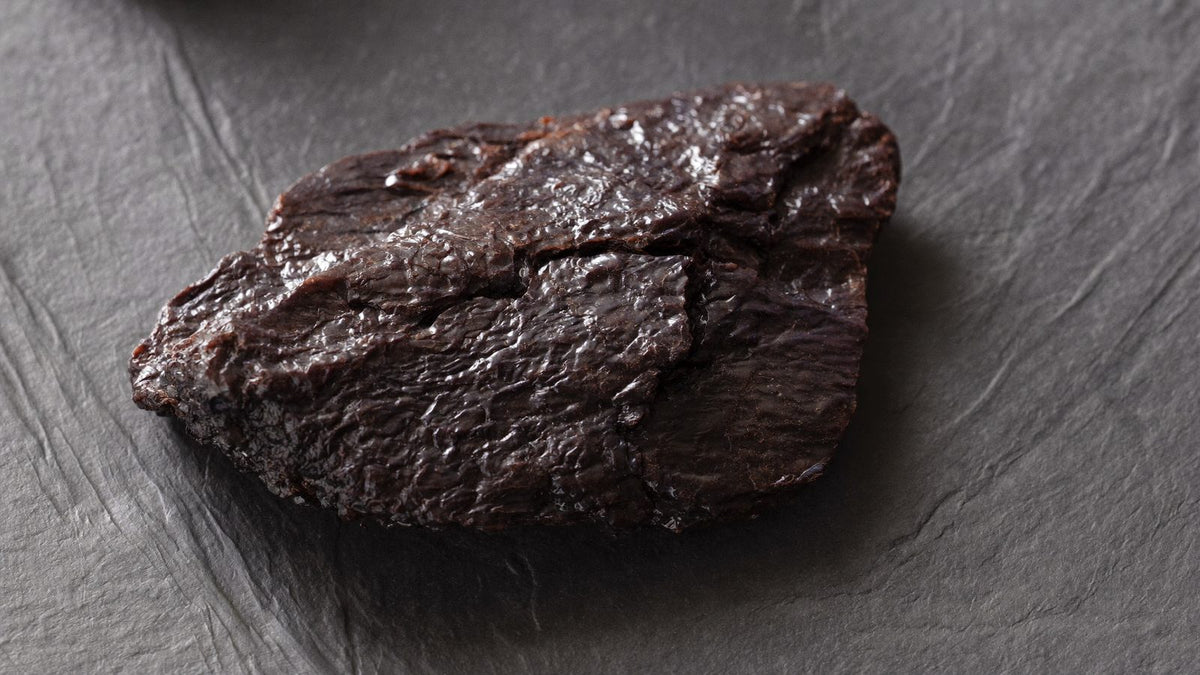
Shilajit forms over centuries inside mountain rock, which makes the heavy metals question a fair one to ask before anything else. The honest answer has two parts. The humic substances that make up shilajit, fulvic acid included, actively bind and neutralize roughly 12 heavy metals rather than simply containing them alongside everything else in the rock. Independent lab testing of commercial shilajit products has confirmed the practical result, with samples measuring within FDA safety limits. Here is the actual chemistry behind that claim, and why where a batch comes from still matters.
Why is the heavy metals question a fair one to ask?
Shilajit is not synthesized in a lab. It forms slowly inside mountain rock, and mountain rock is geology, not a sterile substrate.
Here is what shilajit actually is, before anything else.
- Organic plant and microbial matter, compressed and slowly transformed inside mountain rock over centuries
- A resin that softens and exudes from rock crevices during warmer months, which is how it has traditionally been collected
- A raw material that gets purified and processed before it ever becomes a tablet
- A substance sitting in the same geological environment as the trace minerals, and yes, the trace heavy metals, found in that rock
A skeptic asking whether that geology includes heavy metals is not being paranoid. They are asking the right question, and shilajit's own chemistry is the honest place to answer it, not a brand's reassurance alone.
What actually happens to metals inside shilajit?

This is where the chemistry actually gets interesting, and where most explanations stop too early.
The humic substances doing the binding
Shilajit is made of humic substances, a family of large organic molecules that includes fulvic acid. Those molecules have a specific chemical structure, rich in binding sites, suited to latching onto metal ions. Chemists call this process chelation.
A 2024 review described the practical effect directly. Shilajit's humic substances actively bind and detoxify roughly 12 different heavy metals, rather than simply carrying them the way an inert material would.
Why this matters more than the raw geology
Here is what that binding actually does.
- Locks onto metal ions rather than leaving them chemically free
- Reduces how reactive and available those metals are inside the body
- Is a property of the resin's own chemistry, not something added afterward
- Is the same broad chemistry, chelation, used in some direct medical treatments for metal exposure
The presence of trace metals in the surrounding rock is a geology fact. What the resin's own chemistry does with them is a separate, and more important, fact.
What does real lab testing of shilajit actually show?

Chemistry explains why testing should come out clean. It does not replace actually testing.
In 2021, researchers used ICP-MS, a precise trace-metal detection method, to test commercial shilajit products directly.
Here is what that testing did.
- Measured actual finished shilajit products, not just raw resin theory
- Tested for the 4 heavy metals regulators watch most closely, arsenic, mercury, lead, and cadmium
- Compared results against FDA safety limits, not a looser internal standard
- Found that the samples tested met those limits
That is the difference between a chemistry argument and a lab result. Both point the same direction here, and a real product should be able to show you both.
Why does where shilajit comes from matter?

Chelation chemistry is consistent. Geology is not.
What the 2025 testing found
A 2025 study measured thallium, a heavy metal, across shilajit from different source regions and found the levels varied widely. Material from one source in Iran measured notably higher than material from a tested source in India. Source geology is not uniform, and treating "shilajit" as one interchangeable raw material misses that.
Why Optimum sources from the Altai mountains specifically
That thallium study's data centered on Iranian and Indian sources. Optimum's own Altai mountain sourced batches are verified independently through the testing described in the next section, rather than assumed safe by association with any single published dataset.
The takeaway is simple. A source region should be named, not vague. "Asia" is not a source. A specific mountain range, tested batch by batch, is.
What does Optimum test for, and how can you check it yourself?

Here is how an untested claim compares to a tested one.
| Untested shilajit | Third-party tested shilajit | |
|---|---|---|
| Heavy metal levels | Unknown, no verification | ICP-MS confirmed, within FDA limits |
| Source region | Often unlisted or vague | Named and traceable |
| Certificate of analysis | Rarely available | Published per batch |
| What you are trusting | A label claim | A lab result you can read yourself |
What actually appears on Optimum's certificate of analysis.
- Results for all 4 heavy metals, with real numbers, not just a pass or fail
- Fulvic acid content, verified by an accredited lab
- Microbial and contaminant screening
- The specific batch number and test date, matching what is in your box
Across every human clinical study ever conducted on shilajit, zero serious adverse events have been reported, and a 91-day rat toxicology study found no organ toxicity even at doses well above typical human intake. Optimum is a small, family owned company out of Florida, and a real person answers when you reach out. It comes as a box of tablets, not a loose powder that loses its fulvic acid before it reaches you.
Common questions about shilajit and heavy metals
Does shilajit actually contain heavy metals?
Shilajit forms inside mountain rock, so it can pick up trace heavy metals from that geology, the same way many minerals and foods grown in soil can. The honest, complete answer has a second half. The humic substances that make up shilajit actively bind and neutralize roughly 12 heavy metals, and independent lab testing of commercial shilajit products has confirmed the practical result, samples within FDA safety limits.
How does shilajit neutralize heavy metals if it forms near them?
Shilajit is made of humic substances, including fulvic acid, which are large organic molecules with a chemical structure suited to binding metal ions, a property chemists call chelation. A 2024 review described this as shilajit's humic substances actively binding and detoxifying roughly 12 heavy metals, rather than passively containing them.
Has commercial shilajit actually been tested for heavy metals?
Yes. A 2021 study used ICP-MS testing, a precise laboratory method, on commercial shilajit products and found that samples met FDA limits for arsenic, mercury, lead, and cadmium. That is direct testing of finished products, not just a claim about the raw resin.
Does it matter where shilajit is sourced from?
Yes, meaningfully. A 2025 study found thallium content varies widely by source region, with notably higher levels from one Iranian source compared to an Indian source. Geology is not uniform, which is exactly why a named, traceable source and a real certificate of analysis matter more than a generic label claim.
How can I verify a specific batch of shilajit is safe?
Ask for the certificate of analysis. A real one names the specific batch, lists results for all 4 heavy metals with actual numbers, and comes from an accredited third-party lab, not the manufacturer's own claim. If a brand cannot produce one, that is the answer to the question.

Optimum Shilajit, tested in full
If you want to see what full transparency actually looks like, sourced from the Altai mountains and tested for all 4 heavy metals on every single batch, here is .
See Optimum ShilajitSources
- Review of heavy metals in shilajit and the humic substance binding mechanism. 2024. https://pubmed.ncbi.nlm.nih.gov/38393486/
- ICP-MS quantification of heavy metals in commercial shilajit products. 2021. https://pubmed.ncbi.nlm.nih.gov/34800280/
- Thallium content in shilajit supplements by source geography. 2025. https://pmc.ncbi.nlm.nih.gov/articles/PMC11743217/
- Stohs SJ. Safety and efficacy of shilajit, a review. Phytotherapy Research. 2014. https://pubmed.ncbi.nlm.nih.gov/23733436/
- Velmurugan V, et al. 91-day rat toxicology study of black shilajit. 2012. https://pmc.ncbi.nlm.nih.gov/articles/PMC3609271/