
Does Shilajit Have Iron in It? What Purified Extracts and Animal Studies Show
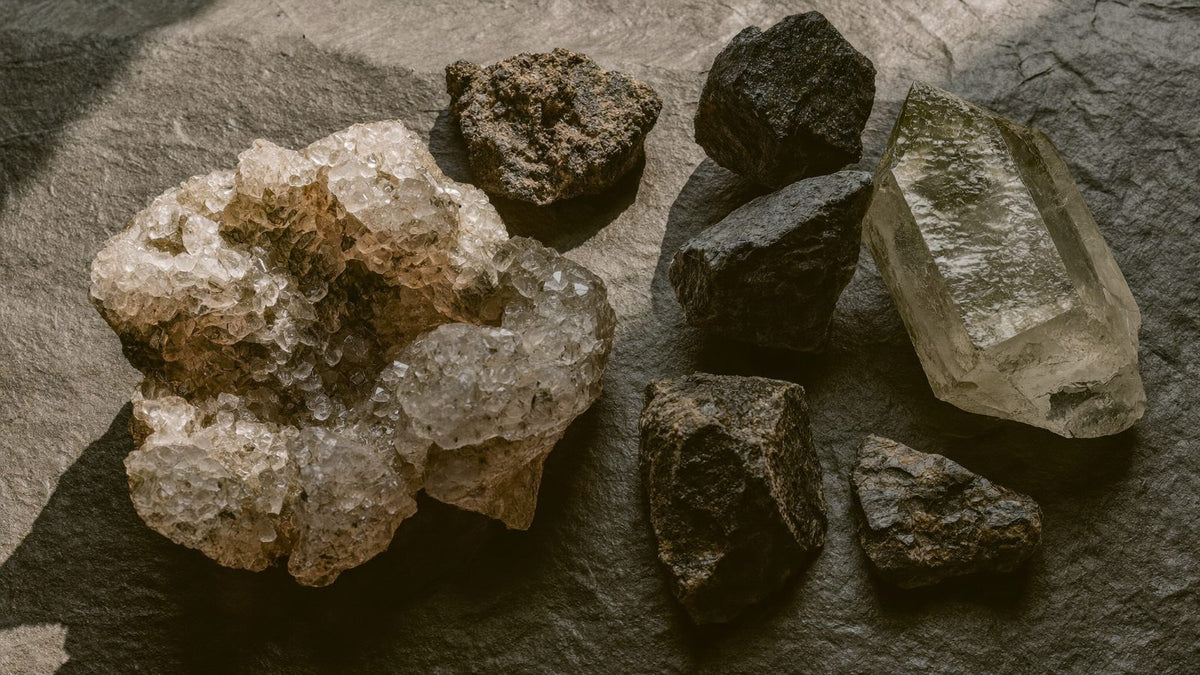
Only a trace. Purified shilajit extracts hold about 120 to 825 mg of iron per kg (Rizun and colleagues, Pharmaceuticals, 2026). At 2 tablets a day that is roughly 0.05 to 0.33 mg of iron, which is under 5% of the 8 mg a day that a woman over 51 needs. So shilajit will not fix low iron, and it will not load you with iron either. This post shows the numbers and where the animal safety data stop.
How much iron is actually in shilajit?

Rizun and colleagues (Pharmaceuticals, 2026) ran a biogeochemical evaluation of shilajit and measured its mineral content (PMID 42797531). For purified extracts the iron came out at about 120 to 825 mg per kg.
That sounds like a lot until you convert it to a tablet.
What does that look like at 2 tablets a day?
A kilogram is a thousand grams, and a daily dose is a small fraction of one gram. Do the math and the daily iron comes to the following.
- About 0.05 mg at the low end of the range.
- About 0.33 mg at the high end of the range.
Those figures are for a purified extract. The range is wide because shilajit is a natural material and each batch carries its own mineral mix.
How does that compare with what a woman over 51 needs?

The recommended iron intake is 8 mg a day for a woman over 51. For women 19 to 50 it is 18 mg, because monthly blood loss stops after menopause and the need falls.
Now set the two numbers side by side.
| Daily iron | |
|---|---|
| Woman over 51, recommended intake | 8 mg |
| Shilajit at 2 tablets, low end | About 0.05 mg |
| Shilajit at 2 tablets, high end | About 0.33 mg |
| Share of the daily need at the high end | Under 5% |
Even at the top of the range, two tablets supply less than a twentieth of what her body asks for. It is a trace, not a source.
What happened to iron in the animal safety studies?
The question behind the question is often "could it build up?" The animal data speak to that, with limits.
Velmurugan and colleagues (Asian Pacific Journal of Tropical Biomedicine, 2012) gave black shilajit to rats for 91 days and checked safety (PMID 23569899). Liver iron rose only at 5,000 mg per kg of body weight. That dose is far above anything in a tablet.
Here is what that does and does not tell us.
- It shows no iron rise in rat liver at lower doses over 91 days.
- It does not prove anything about long-term human iron stores.
- It does not replace a human trial, and I will not claim it does.
The honest reading is that iron is not what shilajit is about, and nothing in the data points to it as a worry at tablet doses.
Is shilajit a fix for low iron?

No, and it should not be sold that way. There is no human trial of shilajit in anemia, and the iron it carries is under 5% of the daily need.
If low iron is your problem, the fix is iron. That means iron-rich food and a real iron source, taken in a form that is built for the job. Shilajit does a different job.
It helps to be plain about what each one does.
- Iron-rich food and iron supplements raise iron intake.
- Shilajit is studied for other results, such as bone density in postmenopausal women (see the shilajit osteoporosis clinical trial page and the shilajit bone research page).
- Neither one stands in for the other.
A woman can take shilajit and still need to look after her iron. The two do not overlap.
What is shilajit made of, if not iron?

Shilajit is a mineral-rich resin made of fulvic acid, humic acids and minerals. The Optimum resin comes from the Altai mountains, and it is purified before it is made into tablets.
Fulvic acid is the part that has drawn the most research. Iron is one trace mineral among many in the mix, and it is not the reason women take it.
Shilajit is not a hormone. It supports the body's own estrogen signaling. Zero serious adverse events were recorded across human shilajit studies.
One more honest limit. Mineral content varies from batch to batch in a natural product. That is why the figures here are ranges, and why a published test result matters more than a single number on a page.
Common questions about shilajit and iron
Does shilajit contain iron?
Only a trace. Purified shilajit extracts hold about 120 to 825 mg of iron per kg (Rizun and colleagues, Pharmaceuticals, 2026). At 2 tablets a day that works out to about 0.05 to 0.33 mg of iron daily, which is under 5% of the 8 mg a day recommended for a woman over 51.
Can shilajit raise your iron levels?
Not in any meaningful way at the dose in a tablet. The amount is about 0.05 to 0.33 mg a day. In a 91-day rat study, liver iron rose only at 5,000 mg per kg of body weight (Velmurugan and colleagues, 2012), a dose far above any tablet.
Is shilajit a treatment for low iron?
No. Shilajit supplies well under 5% of a woman's daily iron need, and no human trial has tested it in anemia. If you want to raise iron, food and a real iron source do that job. Shilajit is not sold or studied for it.
How much iron does a woman over 51 need?
The recommended intake is 8 mg of iron a day for women over 51, lower than the 18 mg a day for women 19 to 50 because periods have stopped. Two shilajit tablets supply about 0.05 to 0.33 mg of that, so shilajit is not a meaningful source.
Is it safe to take shilajit with other supplements that contain iron?
No study has tested that pairing, so no interaction data exist. The iron in shilajit is a trace, at about 0.05 to 0.33 mg a day. Zero serious adverse events were recorded across human shilajit studies.

Optimum Shilajit
Optimum Shilajit is purified resin from the Altai mountains, third-party tested for heavy metals with results published. Two tablets with breakfast, made in small batches by a family-owned company out of Florida, with a 90-day money-back guarantee.
See Optimum Shilajit