
A Cracked Rib From a Cough or a Hug After 50 Can Be an Osteoporosis Warning
A rib fracture after 50 is one of the clearest warnings that bone has thinned. In the National Osteoporosis Risk Assessment of 155,031 postmenopausal women, a rib fracture history meant a 2.4-fold higher risk of any new clinical fracture (Sajjan and colleagues, 2012). The only randomized trial of shilajit in postmenopausal women, Pingali and Nutalapati (Phytomedicine, 2022), found hip bone density rose on shilajit and fell in the women who did not take it.
Can a cough or a hug really break a rib?

Healthy ribs are flexible. They bend under a squeeze and spring back.
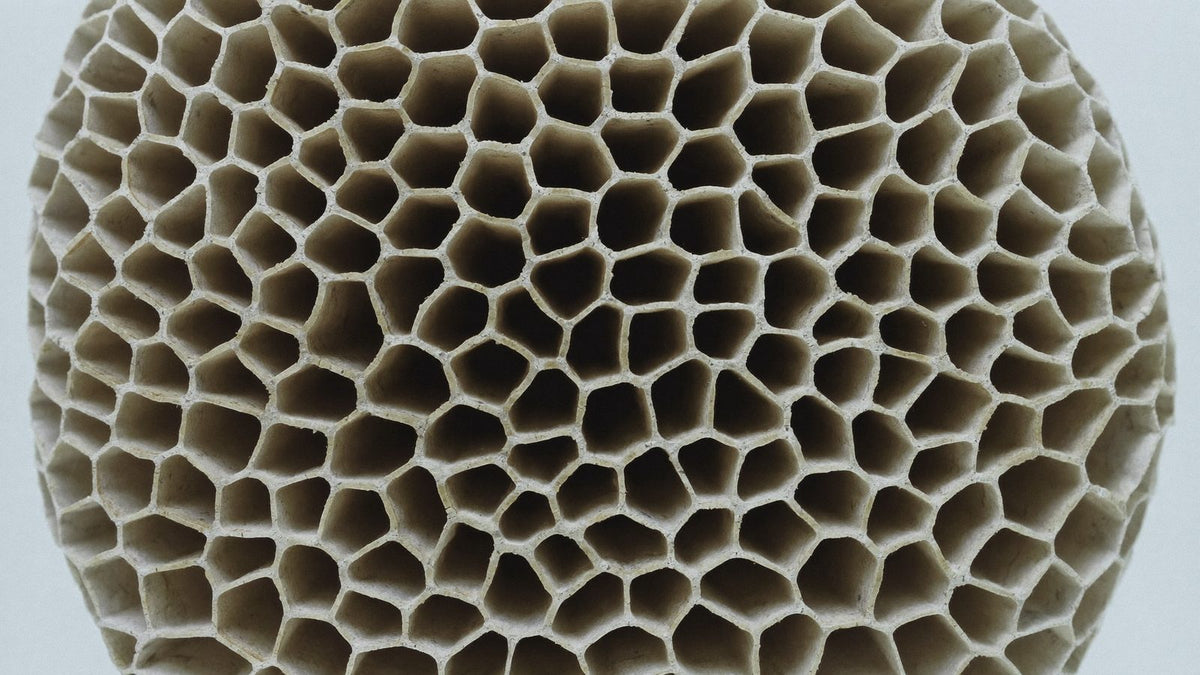
Ribs are mostly spongy bone wrapped in a thin shell. That spongy inside is the first place bone thins after menopause.
When the honeycomb inside has lost its walls, an ordinary force can be enough. The usual triggers are small ones.
- A hard cough during a cold or bronchitis.
- A tight hug from a grandchild.
- A twist reaching into the back seat of the car.
- A turn in bed onto a hard edge.
None of these would trouble strong bone. That is exactly why the fracture matters.
Is a rib fracture an "osteoporotic" fracture?
Researchers have debated how much weight to give it. Sajjan and colleagues (Osteoporosis International, 2012) put numbers on the question.
Rib fracture was the second most common clinical fracture in the women they followed, after the wrist. It is common, and it is often brushed off as a sore side.
What does a rib fracture predict after 50?
The NORA cohort enrolled 155,031 postmenopausal women aged 50 to 99. At the start, 4,758 of them (3.07%) reported a rib fracture and no other fracture.
Over five years, those women were compared with women who had no fracture history. Here is how the risk stacked up.
| New fracture at the | Adjusted relative risk after a rib fracture |
|---|---|
| Rib | 5.4 times higher |
| Spine | 2.1 times higher |
| Wrist | 1.4 times higher |
| Any clinical site | 2.4 times higher |
The hip and forearm did not reach statistical significance. The rib, spine and wrist did.
Does age change the picture?
The authors split the women by decade. Future fracture risk was at least doubled in every age group.
- Ages 50 to 59 carried a relative risk of 3.4.
- Ages 60 to 69 carried 2.5.
- Ages 70 to 79 carried 2.0.
- Ages over 80 carried 2.0.
The youngest group had the highest figure. A woman in her fifties with a cracked rib has the most to learn from it.
The cohort relied on self-reported fractures, and the study was funded in part by a drug maker. It is large, but it shows association and not cause.
Why is a rib fracture easy to miss as a warning?

Ribs are not set in a cast. Nobody scans a sore side.
The pain fades in a few weeks, and the story becomes "I coughed too hard." The bone behind it stays exactly as thin as it was.
Compare that with a broken wrist, which gets a cast, a follow-up and a conversation. A rib gets a heating pad.
Here is how the two look side by side.
| Wrist fracture | Rib fracture | |
|---|---|---|
| How common | Most common clinical fracture | Second most common |
| Usual care | Cast, visits, imaging | Rest and pain relief |
| Seen as a bone warning | Often | Rarely |
Sajjan and colleagues argued the rib deserves the same attention. Women presenting with rib fractures, they wrote, should be evaluated for management to prevent future fractures.
What is happening inside the bone?
After menopause, estrogen signaling falls. The cells that clear old bone keep working, and the cells that build new bone fall behind.
The honeycomb loses walls. A rib, with its thin shell and spongy core, shows it early.
What did the shilajit trial show for postmenopausal bone?

Pingali and Nutalapati ran a 48-week randomized, double-blind, placebo-controlled trial (Phytomedicine, 2022, PMID 35933897). It enrolled 60 postmenopausal women with an average hip T-score of -2.5, the osteoporosis line.
The results were direct.
- Women took 250 mg or 500 mg of standardized shilajit a day, or placebo.
- Hip bone density rose on shilajit.
- Hip bone density fell in the women who did not take it.
- The women did not take any calcium or vitamin D.
Every single woman who took it reversed her osteoporosis.
Shilajit is not a hormone. It supports the body's own estrogen signaling, the system that keeps bone clearing and bone building in step. That is the system a thinning rib is telling you has slipped. The wider human, animal and cell evidence is collected on our shilajit bone research page.
Does shilajit help a broken bone heal?
One trial looked at healing. Sadeghi and colleagues (2020) ran a randomized, double-blind, placebo-controlled trial in 160 patients with a new tibia fracture at three hospitals in Tehran.
Patients took 2 capsules of 500 mg a day for 28 days. Mean healing time was 129 days on shilajit against 153 days on placebo, about 24 days faster.
That was the shin bone, not ribs. It tells us about repair after a break, and it should not be stretched to a cracked rib.
Why does the fulvic acid matter?
The shilajit in the Pingali trial was standardized to more than 50% fulvic acid. Fulvic acid is a small, water-soluble molecule that binds minerals and helps carry them.
Bone is a mineral organ, so a mineral carrier is a sensible fit. The trial tested the whole resin and cannot split credit. The honest phrase is possible contributor.
Zero serious adverse events have been recorded across the human shilajit studies. Pingali was one trial of 60 women, and it should be read that way.
Common questions about rib fractures and bone
Can a rib break from a cough or a hug?
Yes, in thin bone it can. In the National Osteoporosis Risk Assessment of 155,031 postmenopausal women, rib fracture was the second most common clinical fracture after the wrist (Sajjan and colleagues, 2012). A rib that breaks from a minor strain is a sign the bone behind it may be fragile.
Does a rib fracture mean I have osteoporosis?
Not on its own, but it raises the odds. Women with a prior rib fracture had a 2.4-fold higher risk of any new clinical fracture across 155,031 women (Sajjan and colleagues, 2012). The researchers wrote that a rib fracture history suggests osteoporosis.
How much more likely is another fracture after a rib fracture?
In 155,031 postmenopausal women, a rib fracture after age 45 carried a 5.4-fold risk of a new rib fracture, a 2.1-fold risk at the spine and a 1.4-fold risk at the wrist (Sajjan and colleagues, 2012). Risk was at least doubled at every age.
Was shilajit tested in postmenopausal women?
Yes. The 48-week Pingali and Nutalapati trial (Phytomedicine, 2022) enrolled 60 postmenopausal women, average hip T-score -2.5. Hip density rose on shilajit and fell in women who did not take it. They did not take any calcium or vitamin D.
Is shilajit a hormone?
No. Shilajit is not a hormone. It supports the body's own estrogen signaling, which keeps bone-building and bone-clearing cells in step after menopause. Zero serious adverse events have been recorded across human shilajit studies.

Optimum Shilajit
Optimum Shilajit is purified resin from the Altai mountains, third-party tested for heavy metals with results published. Two tablets with breakfast, made in small batches by a family-owned company out of Florida, with a 90-day money-back guarantee.
See Optimum Shilajit