
Do Older Bone Cells Still Respond? What the Aging Research Shows
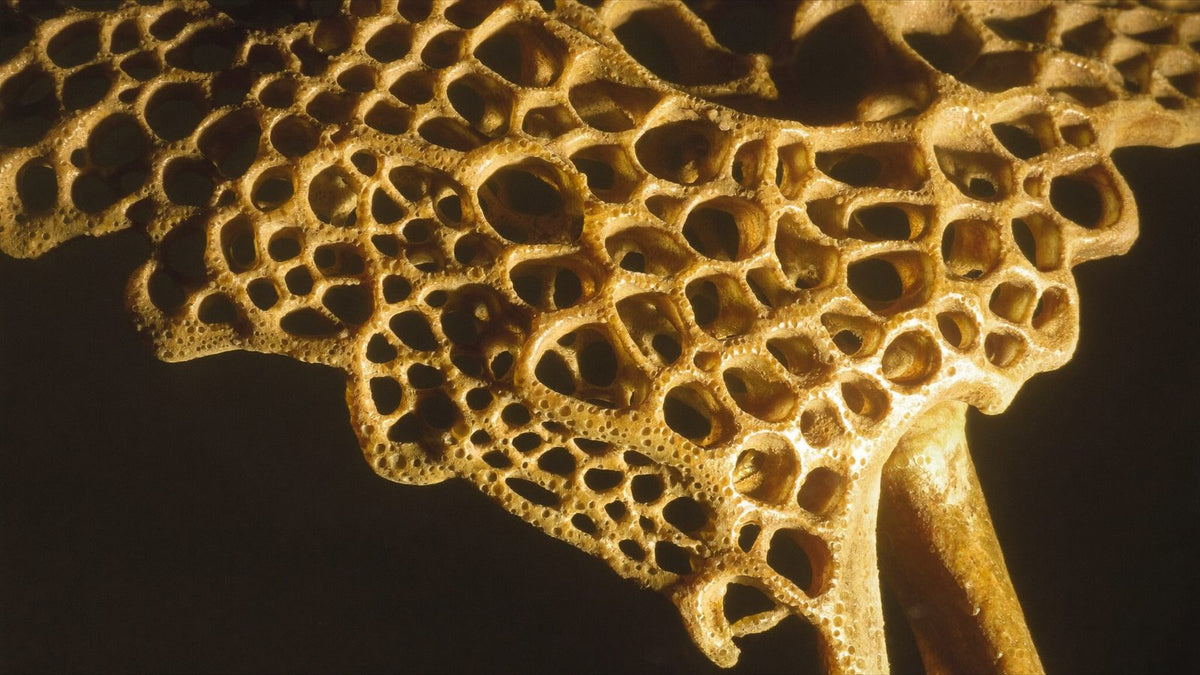
Stem cells from donors aged 58 to 64 kept pace with stem cells from 21-year-olds when both were grown on pearl for 14 days (Wilson and colleagues, Bioengineering, 2024). In a separate 48-week trial of 60 postmenopausal women with an average hip T-score of -2.5, shilajit raised hip density while placebo lowered it, and every single woman who took it reversed her osteoporosis.
Why do people say bone cells wear out with age?

The idea is simple, and it is half right. Bone is rebuilt all your life by cells that clear old bone and cells that lay down new bone. After menopause, the clearing side speeds up.
The trouble starts when that gets stretched into "the builders are too old to work." A woman hears it from a pamphlet or a relative, and she quietly stops expecting anything from her bones.
The cell research does not support that. Here is what it actually found.
Do stem cells from older donors still work?

A direct age comparison
Wilson and colleagues (Bioengineering, 2024) did the cleanest test of the idea. They took human bone-marrow stem cells from two groups of donors and put both on pearl for 14 days.
- Older donors were aged 58 to 64.
- Younger donors were aged 21 to 26.
- The result was that the older donors' cells kept pace with the young donors' cells.
That is the age most women reading this are. Their stem cells were not too old to respond.
Worn cells that still laid down mineral
Brion and colleagues (Journal of Structural Biology, 2015) used bone cells from people having knee replacements for arthritis. These cells had lost much of their ability to lay down mineral. On pearl, calcium was being laid down by day 7.
Both results come from cells in a dish, so neither is a promise about a hip. They do answer one narrow question. Older cells are still able to respond when something gives them a reason to.
What happened in older animals?

Nguyen and colleagues (Experimental Gerontology, 2023) fed 16-month-old female mice pearl in the diet for 90 days. Their bones came out stronger than with plain calcium, and bone-breaking gene activity was lower.
Shilajit has its own cell and animal work in the same direction.
- Kangari and colleagues (2022) turned human stem cells into bone-building cells, even without the usual bone-growth chemicals.
- Pordeli and colleagues (2025) raised bone-building enzyme activity and calcium deposits in rat bone-marrow stem cells over 21 days.
- Azizpour and colleagues (2020) lowered RANKL and raised OPG in human bone cells.
That last pair of signals is the one that matters next.
What did shilajit do in women who started with osteoporosis?
Cells and mice are the lead-in. The real question is what happened in women.
Pingali and Nutalapati (Phytomedicine, 2022) ran a randomized, double-blind, placebo-controlled trial at Nizam's Institute of Medical Sciences. Sixty postmenopausal women took 250 mg of shilajit, 500 mg of shilajit or placebo for 48 weeks. Their average hip T-score was -2.5, which is osteoporosis. They didn't take any calcium or vitamin D. The details are on our clinical trial research page.
Hip and spine density rose on shilajit. The placebo group kept losing density. In the 500 mg group at week 48 the signals moved like this.
- OPG rose 57.3%. OPG is the brake on bone clearing.
- RANKL fell 9.8%. RANKL is the switch that turns clearing on.
- CTX-1 fell 21.8%. This is a blood marker of bone breakdown.
Shilajit is not a hormone. It supports the body's own estrogen signaling. These are the same two signals Azizpour and colleagues moved in human bone cells, which is why the cell work and the trial read as one story.
| Cell and animal studies | The women's trial | |
|---|---|---|
| Who | Donor cells, mice, rats | 60 postmenopausal women |
| Signal seen | RANKL down, OPG up | OPG up 57.3%, RANKL down 9.8% |
| Outcome | Bone-building activity | Hip and spine density up |
A reasonable reading is that the signal still works at 60. The women in the trial averaged an osteoporosis-range hip and still responded. More of the library sits on our shilajit bone research page.
What does this leave open?
The honest limits are short.
- The donor-age study used pearl, not shilajit. It shows older stem cells can respond. It does not show shilajit does the same in them.
- A cell dish is not a hip. It cannot show fracture protection.
- A mouse is not a woman. The direction matches, the size will not.
- The shilajit trial counted density, not fractures. It was 60 women over 48 weeks.
What holds is the narrow claim. Nothing in this research says bone cells are finished at 60. Zero serious adverse events were reported in this trial or in any human shilajit study.
Common questions about aging and bone cells
Can bone still rebuild after 60?
The trial evidence says yes. In Pingali and Nutalapati (Phytomedicine, 2022), 60 postmenopausal women averaging a hip T-score of -2.5 took shilajit for 48 weeks. Hip density rose on shilajit and fell on placebo. Every single woman who took it reversed her osteoporosis.
Do bone stem cells get worse with age?
Not as much as people assume. Wilson and colleagues (Bioengineering, 2024) compared human bone-marrow stem cells from donors aged 58 to 64 with donors aged 21 to 26. Over 14 days on pearl, the older donors' cells kept pace with the young donors' cells.
What happens to bone in older animals given shilajit or pearl?
Nguyen and colleagues (Experimental Gerontology, 2023) fed 16-month-old female mice pearl for 90 days. Their bones ended up stronger than with plain calcium, with lower bone-breaking gene activity. It is a mouse study, so it shows a direction and not a result in women.
Why does bone loss speed up after menopause?
Estrogen falls, and the signal that switches bone clearing on, RANKL, outruns its brake, OPG. In the 48-week shilajit trial of 60 women, OPG rose 57.3% and RANKL fell 9.8% in the 500 mg group, which is the balance moving back toward holding bone.
Has shilajit caused serious side effects in studies?
Zero serious adverse events have been reported across any human shilajit study, including the 48-week trial of 60 postmenopausal women. Shilajit is not a hormone. It supports the body's own estrogen signaling.

Optimum Shilajit
Optimum Shilajit is purified resin from the Altai mountains, third-party tested for heavy metals with results published. Two tablets with breakfast, made in small batches by a family-owned company out of Florida, with a 90-day money-back guarantee.
See Optimum Shilajit