
What "Third-Party Tested" Really Means (and Why Most Skip It)
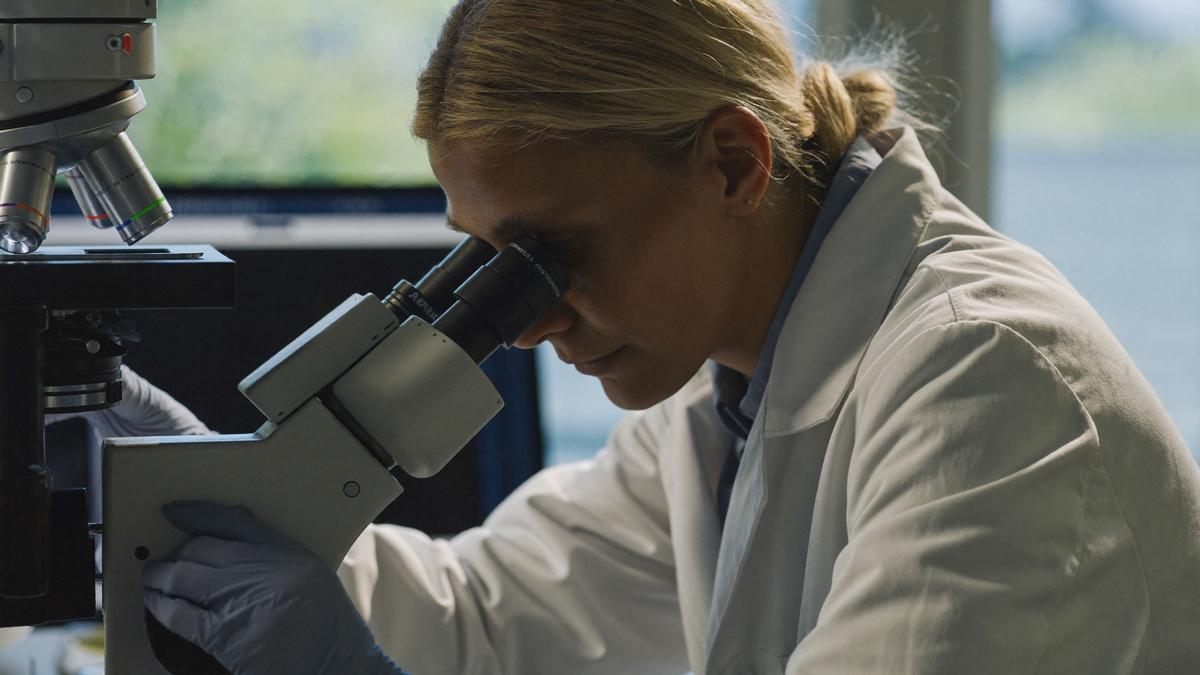
Third party tested means an independent, accredited laboratory with no stake in the sale measured the product and signed a certificate of analysis. For shilajit, the 4 metals that matter most are lead, arsenic, cadmium and mercury, and each should be reported as a measured number, since raw resin can carry heavy metals. Most brands skip it because no regulator requires it in the United States and testing costs money.
What does "third-party tested" actually mean?
It means the testing was done by an outside lab, not the company selling the product. The lab is accredited, it has no financial interest in the result, and it issues a document called a certificate of analysis, or COA.

That independence is the whole point. A brand testing its own product is grading its own homework. An accredited third party is a referee who does not care whether you buy.
A good COA reports two kinds of things for a mineral supplement like shilajit:
- Contaminants, the things you want low or absent: lead, arsenic, cadmium, mercury, and sometimes microbes or mold.
- Active content, the things you want present: for shilajit, that usually means the fulvic acid percentage, the marker of a genuine, well-purified resin.
Why do most supplement brands skip it?
The honest answer is that they are allowed to. In the United States, supplements do not have to prove their purity to a regulator before they reach the shelf. The burden only kicks in after something goes wrong.
So a company can print "tested" or "lab verified" on the front of a package without an accredited, independent report standing behind those words. The claim is marketing, not proof, unless there is a COA you can actually see.
Independent batch testing also costs real money and adds time to every production run. For shilajit specifically, that testing is not optional in any honest sense, because raw resin is a wild material. Skipping the test is the cheaper path, and for a 45+ buyer trying to do something good for herself, it is the riskier one.
What does a real shilajit test look for?
Two things, mainly: that the heavy metals are far below safety limits, and that the active compounds are genuinely there.

The reassuring part is that clean shilajit is achievable and measurable. When independent ICP-MS testing was run on commercial shilajit, the samples met FDA limits for arsenic, mercury, lead, and cadmium (2021 analysis, PMID 34800280). Purity is not a marketing wish. It is a number a real lab can confirm.
There is also a quietly fascinating layer here. The humic substances inside shilajit are among the most-studied metal-binding compounds in all of chemistry, and a 2024 review noted that they actively bind and help clear roughly a dozen trace metals (2024 review, PMID 38393486). The same grabbing chemistry that carries good minerals into your cells also helps tie up unwanted ones. Testing confirms the result; the chemistry explains why a clean, well-sourced resin tends to stay clean.
How do you read a certificate of analysis?
You do not need a science degree. You need to find three things and confirm a fourth. Here is the checklist.
| Look for | What good looks like |
|---|---|
| Each heavy metal, listed separately | Lead, arsenic, cadmium, and mercury each on its own line, never a vague "passed" stamp |
| Real numbers against a limit | A measured value shown next to the published safety limit, so you can see the gap |
| A named, accredited lab | An actual laboratory name, not "tested by us" |
| A recent date and a batch or lot | Testing tied to the batch you are buying, not a years-old certificate |
If a company cannot produce that document when you ask, you have your answer. A brand that tests is usually proud to show you. Our separate piece on how to read a shilajit lab report walks through an actual certificate line by line.
Does the source of the shilajit change the risk?
Yes, and this is the part the label rarely tells you. Shilajit forms slowly inside mountain rock, so its trace-metal fingerprint reflects the geology it came from.

Published analysis found that levels vary by region. A 2025 study measured thallium content across sources and reported markedly different amounts depending on origin, with material from the Altai mountains among the cleaner profiles (2025 analysis, PMC11743217). Source is not a romantic detail. It is a head start on purity, or a problem you then have to test your way out of.
That is why sourcing and testing work together. Start with a clean origin like the Altai mountains, purify the resin, then prove it with an independent lab. One without the other leaves a gap.
Is third-party tested shilajit safe to take?
The safety record for purified shilajit is genuinely strong, and it is worth saying plainly.
Zero serious adverse events have ever been reported across any human shilajit study (Stohs, 2014). On top of that human record, a 90-day toxicology study of a fulvic and humic preparation found no organ toxicity and no genotoxicity (2020 toxicology study, PMC7505752), and a 91-day animal study at high doses showed no organ damage and stable iron levels (Velmurugan and colleagues, 2012). Some people feel a mild digestive adjustment in the first week or two, the same as starting any mineral-dense supplement.
So the safety question and the purity question are really the same question. A purified, third-party-tested resin is the product the research describes. An untested one is an unknown, and an unknown is exactly what you do not want to swallow every morning.
Why clean minerals are the whole point
Testing is not box-ticking. It protects the reason you would take shilajit in the first place.

The appeal of shilajit is its mineral matrix: more than 80 trace minerals, carried by fulvic acid into your cells in a form your body recognizes, the same way minerals arrive in whole food. Those minerals feed steady cellular energy, give your body the raw materials it uses to maintain collagen and connective tissue, and quietly support dozens of small systems that run low after 45.
None of that lands if the resin is dirty. Clean inputs are what let the good chemistry do its job. Third-party testing is simply how you make sure the matrix you are paying for is the matrix you are getting.
Common questions about third-party testing
Is "lab tested" on the label the same as third-party tested?
Not necessarily. "Lab tested" can mean a brand tested its own product in-house. Third-party tested means an independent, accredited laboratory did the analysis and signed the certificate. Always ask which one it is, and ask to see the document.
What heavy metals should a shilajit report cover?
The four that matter most are lead, arsenic, cadmium, and mercury. Each should appear on its own line with a measured number shown against a published safety limit, not a single "pass" stamp for all four together.
How often should a brand test?
Ideally every batch, because shilajit is a natural material and batches can differ. A certificate tied to the lot you are buying, with a recent date, is far stronger than a single old report used to vouch for everything since.
Does third-party testing make shilajit more expensive?
It adds cost, yes, which is part of why some brands skip it. For a product made from raw mountain resin, that cost is the difference between a verified mineral supplement and an unknown. It is the one place we think the corner should never be cut.
Where can I see Optimum's lab results?
Pure Altai Shilajit, tested in full
Sourced from the Altai mountains. Purified, pressed into tablets, and tested for all four heavy metals by a US-accredited laboratory. We publish every result before you buy. Family-owned out of Florida.
See Pure ShilajitSources
- ICP-MS quantification of heavy metals in commercial shilajit; all samples met FDA limits for arsenic, mercury, lead, and cadmium. 2021. PMID 34800280. pubmed.ncbi.nlm.nih.gov/34800280 (retrieved June 2026).
- Review: heavy metals in shilajit, and how its humic substances bind and detoxify roughly a dozen trace metals. 2024. PMID 38393486. pubmed.ncbi.nlm.nih.gov/38393486 (retrieved June 2026).
- Thallium content of shilajit supplements varies by geographic source; Altai material among the cleaner profiles. 2025. pmc.ncbi.nlm.nih.gov/articles/PMC11743217 (retrieved June 2026).
- Stohs SJ. "Safety and efficacy of shilajit (mumie, moomiyo)." Phytother Res. 2014;28(4):475-479. PMID 23733436. pubmed.ncbi.nlm.nih.gov/23733436 (retrieved June 2026).
- Ninety-day repeated-dose toxicology of a fulvic and humic preparation; no organ toxicity, no genotoxicity. 2020. pmc.ncbi.nlm.nih.gov/articles/PMC7505752 (retrieved June 2026).
- Velmurugan C, et al. Ninety-one-day oral toxicity of black shilajit in rats; no organ toxicity, stable iron. 2012. pmc.ncbi.nlm.nih.gov/articles/PMC3609271 (retrieved June 2026).
- Carrasco-Gallardo C, Guzman L, Maccioni RB. "Shilajit: A Natural Phytocomplex with Potential Procognitive Activity." Int J Alzheimers Dis. 2012;2012:674142. PMID 22482077. pubmed.ncbi.nlm.nih.gov/22482077 (retrieved June 2026).