
Vitamin K2 and Artery Stiffness After Menopause: What a New 2025 Trial Found
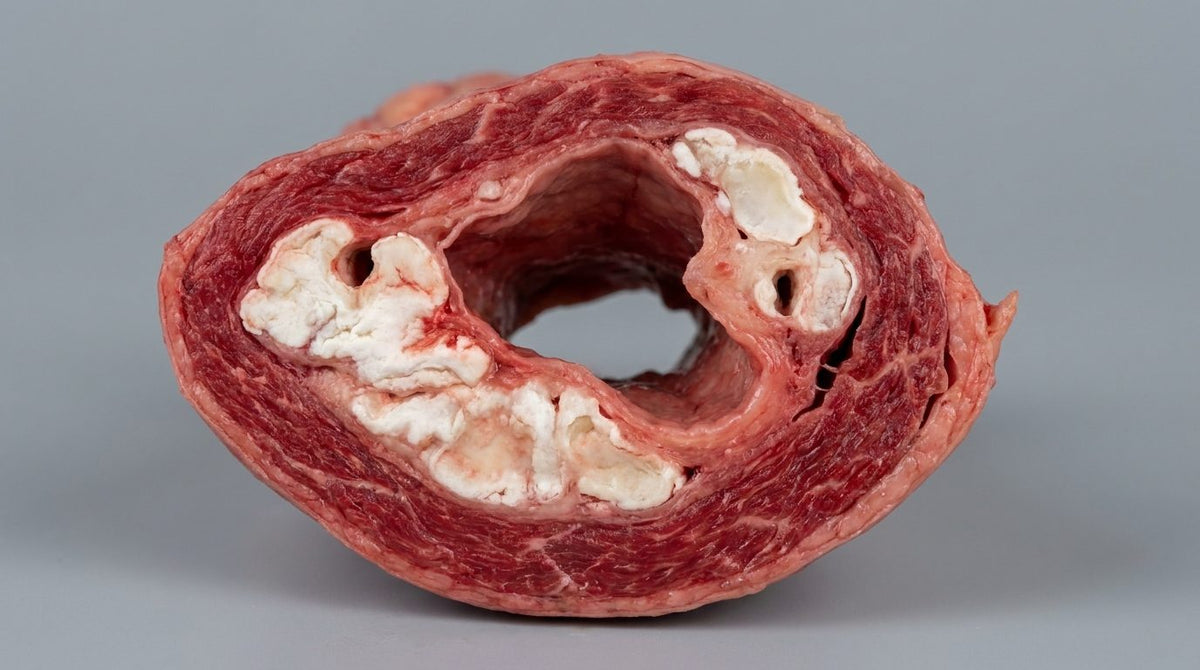
The same vitamin that tells calcium to bind into bone also tells it to stay out of artery walls, and a trial published in February 2025 measured that second job directly in postmenopausal women for the first time. Shilajit's own vascular research runs through a separate mechanism, antioxidant activity and nitric oxide signaling, so this article keeps the two stories honestly apart rather than folding one into the other.
What does vitamin K2 have to do with artery stiffness?

Calcium does not stay obediently in the bones once it enters the bloodstream. Left without a directing signal, some of it can deposit in soft tissue instead, including the smooth muscle layer of artery walls. That process, vascular calcification, is one contributor to arteries becoming stiffer and less able to expand and relax with each heartbeat.
The protein responsible for keeping calcium out of the vessel wall is called matrix Gla protein, made by the smooth muscle cells lining blood vessels. It works almost exactly like osteocalcin does in bone. In its raw form it cannot bind calcium. It needs vitamin K2 to carboxylate it into an active shape first.
Two proteins, one vitamin, two different jobs
One vitamin activates two separate proteins, and each protein guards a different tissue.
- Osteocalcin, activated by K2, binds calcium into bone matrix
- Matrix Gla protein, also activated by K2, blocks calcium from depositing in artery walls
- Both proteins stay in an inactive form when K2 intake is low
- Researchers can measure inactive matrix Gla protein directly in blood, which is what the trials below tracked
What did a three-year trial find in postmenopausal women?
A randomized, double-blind trial led by Knapen and published in Thrombosis and Haemostasis in 2015 followed 244 healthy postmenopausal women for three full years, comparing 180 micrograms of MK-7 daily against placebo.
The results moved on two separate measures. Carotid-femoral pulse wave velocity, a standard measure of how quickly a pressure wave travels down the artery wall and a proxy for stiffness, decreased significantly in the K2 group. The Stiffness Index beta, a second independent stiffness measure, also decreased. Underneath both readings, inactive matrix Gla protein fell by 50 percent compared to placebo, confirming the protein was actually being switched on.
Most heart-health advice never mentions this switch at all, so here is the contrast.
| What most heart-health advice focuses on | What the matrix Gla protein research adds |
|---|---|
| Cholesterol, blood pressure, and blood flow | A separate question, whether calcium deposits in the artery wall itself |
| Diet and exercise as the main levers | A specific vitamin-dependent protein switch most advice never mentions |
| One number to watch on a lab panel | Two independent stiffness measures, both moving together over three years |
What did the new 2025 trial add?

A trial published in Nutrients in February 2025 followed 165 women with low vitamin K status, 87 of them postmenopausal, for one year on the same 180-microgram MK-7 dose. This is the first K2 vascular trial to break results out by postmenopausal status specifically rather than reporting an all-women average.
In the postmenopausal subgroup, vascular stiffness rose 49.1 percent on placebo over the year and rose only 9.4 percent on K2, a statistically significant difference. Among the women who started with higher baseline stiffness, systolic blood pressure fell 3 percent on K2. Inactive matrix Gla protein fell 27.5 percent. Stiffness still rose in both groups. K2 slowed the rise. It did not reverse it or stop it outright, and that distinction matters more than a headline would suggest.
- Vascular stiffness increased on placebo over one year, a real and expected part of the postmenopausal pattern
- The K2 group's stiffness increase was roughly one fifth the size of the placebo group's
- Systolic blood pressure fell modestly, and only in women who started with higher baseline stiffness
- The underlying biomarker, inactive matrix Gla protein, dropped by more than a quarter
What is the honest dose gap in this research?
Both trials cited here used 180 micrograms of MK-7 per day. Optimum's Calcium D3 + K2 formula delivers 100 micrograms per capsule, the dose that moved the bone-related osteocalcin biomarker in separate research, not the vascular dose used in these two trials.
That gap is stated here directly because the honest version of this article is a report on what a specific dose, tested in a specific trial, measured in postmenopausal women. It is not a promise that a lower daily dose reproduces a result measured at nearly double the amount. No claim here should be read as this product preventing arterial calcification, protecting the heart, or reducing cardiovascular risk. The research supports understanding the mechanism, not a same-dose guarantee.
Where does shilajit's vascular research fit next to this?

Shilajit's own vascular evidence runs through a different door entirely. Its research centers on antioxidant activity, reducing markers like malondialdehyde and C-reactive protein, and on nitric oxide, the signaling molecule involved in how blood vessels relax and expand. That pathway is about vessel function and inflammation, not about the calcium-binding protein switch that matrix Gla protein and vitamin K2 govern.
Neither trial tested the other ingredient, so this article does not merge the two mechanisms into a single combined claim. They sit alongside each other as two separate, honestly reported pieces of vascular research.
- Shilajit's vascular research covers antioxidant markers and nitric oxide, tied to vessel function
- Vitamin K2's vascular research covers matrix Gla protein activation, tied to calcium deposition in the vessel wall
- Both are real, published, human research, on two different biological questions
- Optimum keeps the two claims separate rather than borrowing evidence across them
Shilajit is not a hormone and carries the same safety record across every human study on file, zero serious adverse events ever reported. Optimum sources its resin from the Altai mountains and posts independent lab results for every batch.
Two separate vitamin K2 trials, three years apart, both measuring postmenopausal women specifically, landed on the same protein and the same direction of effect. That kind of replication is worth taking seriously, at the dose it was actually tested at.
Common questions about K2 and artery stiffness
Does vitamin K2 prevent arterial calcification?
The 2025 trial measured vascular stiffness and a calcification-inhibitor protein, not artery calcium buildup directly through imaging. In postmenopausal women, vascular stiffness rose sharply on placebo over one year and rose only slightly on 180 micrograms of K2 daily, a real, measured difference. That is not the same claim as proof the artery walls calcified less, and this article does not make that stronger claim.
What protein keeps calcium out of artery walls?
Matrix Gla protein, made by the smooth muscle cells that line blood vessels. Like osteocalcin in bone, it needs vitamin K2 to switch on and do its job. When K2 is short, matrix Gla protein stays in an inactive form and calcium is freer to deposit in soft tissue, including artery walls, instead of staying directed toward bone.
What dose of K2 did the artery research actually use?
Both trials cited here used 180 micrograms of MK-7 per day, delivered for one to three years. That is 1.8 times the 100 micrograms per capsule in Optimum's Calcium D3 + K2 formula. The dose gap is stated here plainly rather than implied away, because reporting what the research found at the dose tested is different from promising the same result at a lower dose.
How is this different from the shilajit and vascular health research?
They work through different pathways and neither trial tested the other ingredient. Shilajit's vascular research centers on antioxidant activity and nitric oxide, the signaling molecule involved in blood vessel relaxation and endothelial function. Vitamin K2's vascular research centers on matrix Gla protein and calcium deposition in the vessel wall itself. Both are honest, separate mechanisms, not two versions of the same claim.

Optimum Calcium D3 + K2
Formulated with vitamin K2 as MK-7 alongside calcium and vitamin D3, supporting the same directional mechanism this research describes.
See Optimum Calcium D3 + K2Sources
- Knapen MH, Braam LA, Drummen NE, Bekers O, Hoeks AP, Vermeer C. Menaquinone-7 supplementation improves arterial stiffness in healthy postmenopausal women. A double-blind randomised clinical trial. Thromb Haemost. 2015;113(5):1135-1144. https://pubmed.ncbi.nlm.nih.gov/25694037/
- de Vries F, Bittner R, Maresz K, et al. Vitamin K2 Menaquinone-7 Supplementation Improves Arterial Stiffness in a Postmenopausal Subgroup of Women with Low Vitamin K Status. Nutrients. 2025;17(5):815. https://pubmed.ncbi.nlm.nih.gov/40077685/