
Can Pearl Powder Help Your Body Clear Heavy Metals? What a 2025 Mouse Study Found
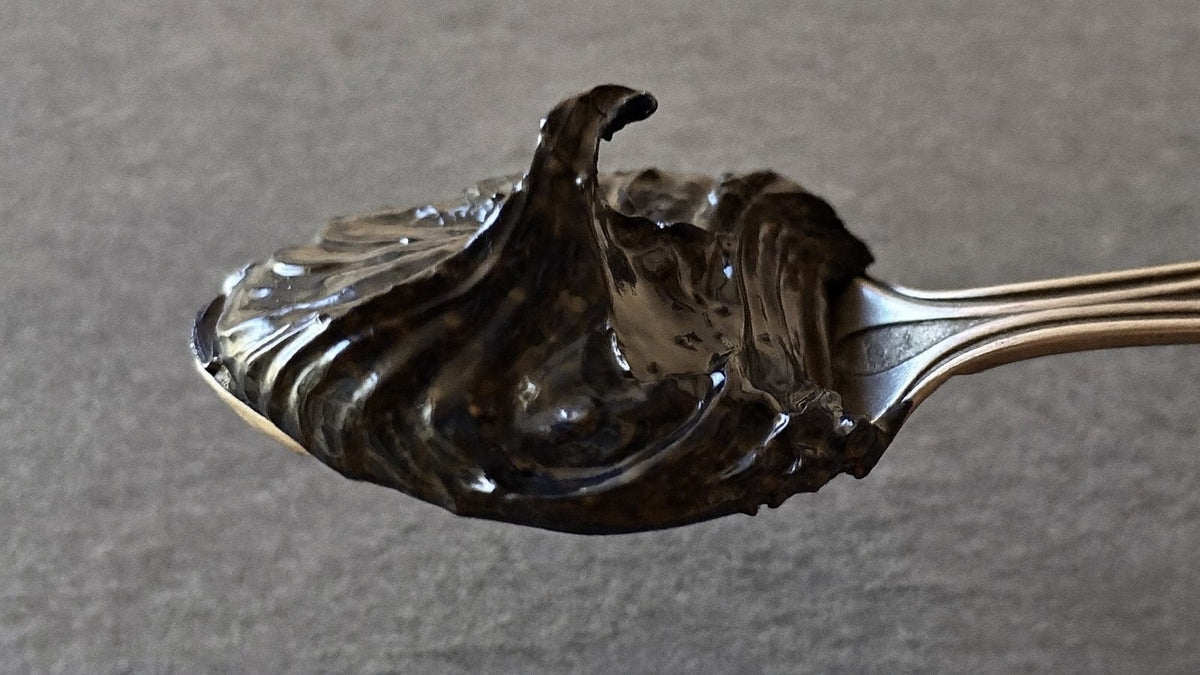
Shilajit's own research already answers one version of the heavy metal question, whether the resin itself carries contamination, and the honest answer is that a clean, tested source binds and carries roughly a dozen trace metals through its humic acid content rather than adding to them. A newer 2025 mouse study asks a different, more ambitious question about pearl powder, the second leg of the Bone Restore Trifecta. Can oral pearl powder help the body clear metals it has already absorbed. The answer in mice was yes, in specific organs, for specific metals, and the honest limits of that finding matter as much as the result itself.
What did the 2025 pearl powder study actually measure?

Researchers gave oral oyster shell pearl powder to mice at three doses, 100, 300, and 500 milligrams per kilogram of body weight, then measured metal concentrations across several organs before and after treatment. The shells were treated with sodium hydroxide before testing, a standard preparation step for isolating the nacre material.
This was not a symptom study. It measured actual metal concentrations in brain, liver, kidney, heart, spleen, and lung tissue, along with kidney and liver function markers, giving a direct read on both the metal levels and whether the animals' organs stayed healthy during treatment.
Why mice, and why that matters here
Mouse studies are the stage before human trials, not a substitute for one. They tell researchers whether a mechanism is worth pursuing further. This study is exactly that, an early but real signal, not a finished answer. Nothing here should be read as proof of what happens in a person.
Which heavy metals dropped, and by how much?
The reductions were measured against untreated control animals, and several were large enough to be statistically significant.
- Brain mercury fell 75%, from 3.02 to 0.77 parts per billion, a highly significant drop
- Liver mercury fell 31%, heart mercury fell 31%, both significant
- Kidney lead fell 48%, from 88.33 to 46.00 parts per billion, the largest lead reduction measured
- Spleen lead fell 24%, liver lead fell 20%, brain lead fell 20%
- Kidney aluminum fell 32%, liver aluminum fell 27%, lung aluminum fell 25%
The safety data behind those numbers
A treatment that lowers toxin levels only matters if it does not also harm the animal delivering the effect. The study tracked exactly that. Kidney and liver function markers, including uric acid, urea, AST, and ALT, stayed protected in the treated animals compared to untreated ones, and the material was non-cytotoxic up to 5000 micrograms per milliliter in lab testing, with a lethal dose above 5000 milligrams per kilogram. That is a wide safety margin relative to the 100 to 500 milligram doses that produced the metal reductions above.
What did pearl powder not do?

A study that only reports wins is not a study worth trusting, and this one did not only report wins.
Pearl powder had no measurable effect on hexachlorobenzene, a persistent organic pollutant unrelated to metals. That negative result matters because it draws the actual boundary of the mechanism. This is metal binding, likely through the same class of chelating action seen with other calcium carbonate and mineral compounds, not a general detox effect against every toxin a body might carry.
| What was tested | Result |
|---|---|
| Mercury (brain, liver, heart) | Significantly reduced across all three organs |
| Lead (kidney, spleen, liver, brain) | Significantly reduced across all four organs |
| Aluminum (kidney, liver, lung) | Significantly reduced across all three organs |
| Hexachlorobenzene | No measurable effect |
| Kidney and liver function markers | Protected, not worsened, by treatment |
That table is the honest shape of the finding. Three metals down, one unrelated pollutant unchanged, and no organ damage along the way.
How does this compare to shilajit's own heavy metal research?
These are two separate ingredients answering two separate questions, and the article that already exists on this blog about shilajit and heavy metals is about a different mechanism entirely. That earlier piece covers whether shilajit itself carries contamination, verified through lab panels and the humic acid content that naturally binds trace metals during formation in the Altai mountains.
This pearl powder study is not about purity at the source. It is about what happens after a metal has already entered the body, whether an oral compound can help pull it back out through the organs it accumulates in. Shilajit's humic acid and pearl powder's nacre content are both metal binding materials, but the research behind each measures a different stage of the same broader concern.
Two legs of the Trifecta, two different jobs
- Shilajit's fulvic and humic acid content is documented to bind roughly a dozen trace metals, relevant to the resin's own purity profile
- Pearl powder's mechanism in this mouse study is metal mobilization and excretion from organs where metals have already accumulated
- Neither result is borrowed to inflate the other, and neither is a substitute for third party lab testing of the actual capsule a person takes
What is the real dose gap between the study and a daily capsule?
Numbers only mean something next to the dose that produced them, and this is where the article has to be precise rather than encouraging.
Using the standard body surface area conversion researchers use to translate an animal dose to an equivalent human amount, the study's lowest tested dose, 100 milligrams per kilogram in a mouse, works out to roughly 570 milligrams per day for a 70 kilogram adult. The Bone Restore Trifecta delivers 500 milligrams of pearl powder per day, just under that lowest tested arm, and well below the 300 and 500 milligram per kilogram doses that produced the largest reductions in the study.
That gap is stated here on purpose. A daily capsule dose sitting near, not above, the lowest tested amount in an animal study is not the same claim as reproducing that study's results in a person, and this article will not imply otherwise.
Where does this leave a woman taking the Trifecta?

Here is the honest ceiling, stated the same way this blog states it for every ingredient.
- This is a mouse study, not a human trial, and no claim here says otherwise
- The pearl powder tested was oyster shell derived, the same nacre material and genus used generally, though not confirmed as identical to any specific brand's processing
- The dose used in the Trifecta sits near, not above, the lowest tested amount in the study
- Whether a specific capsule is itself free of heavy metal contamination is a separate question, answered by third party lab testing, not by this mechanism study
What this research does show, honestly, is a real and specific mechanism worth watching as more research follows it into human trials. It does not show that pearl powder clears heavy metals from a person today.
Common questions about pearl powder and heavy metals
Does the Bone Restore Trifecta remove heavy metals from the body?
This article does not claim that. The evidence behind it is a 2025 mouse study, not a human trial, and no source here says our capsule clears mercury or lead from a person. The finding is real but it stops at the animal stage.
Is this the same as saying our product is free of heavy metals?
No, and those are two different questions. Whether the product itself is contaminated is answered by third party lab testing and a certificate of analysis. This article is about whether pearl powder can help the body clear metals already present, a different mechanism entirely.
What kind of pearl powder was used in the study?
Oyster shell derived pearl powder, the same nacre material and genus as pearl powder generally, though not necessarily identical processing to any one brand's capsule. The study authors treated the shell with sodium hydroxide before testing it in mice.
Did pearl powder work on every toxin tested?
No. It significantly reduced mercury, lead, and aluminum levels in several organs, but it had no measurable effect on hexachlorobenzene, a persistent organic pollutant. That negative result is reported here because leaving it out would overstate what the study found.

Optimum Bone Restore Trifecta
Pearl powder is one of three researched minerals in Optimum's Bone Restore Trifecta, alongside shilajit and bamboo silica, each in the dose this research can actually speak to.
See Optimum Bone Restore TrifectaSources
- Nawabjan A, et al. Oral pearl (oyster shell) powder reduces heavy metal burden and protects organ function in mice. J Hazard Mater Adv. 2025;17:100524.
- Heavy metals shilajit review, humic and fulvic acid metal binding capacity. 2024. https://pubmed.ncbi.nlm.nih.gov/38393486/
- Kim Y, et al. Dual osteoblast activation and osteoclast inactivation by pearl nacre extract. 2012.
- Marotta F, et al. Matrix proteins from pearl and nacre, a review of bioactive mechanisms. 2021. https://pmc.ncbi.nlm.nih.gov/articles/PMC8095667/
- Song Y, et al. Pearls in traditional Chinese medicine, pharmacology and clinical review. Front Pharmacol. 2022. https://pmc.ncbi.nlm.nih.gov/articles/PMC9445187/