
Fulvic Acid Explained: The Mineral Carrier in Shilajit
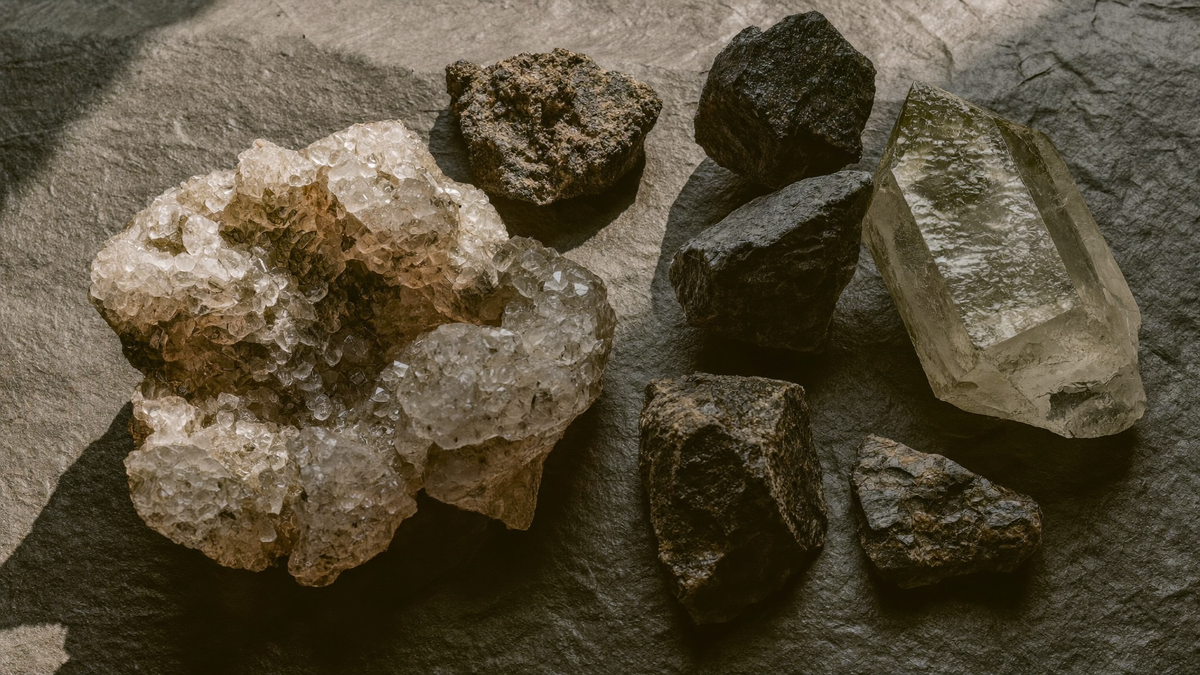
Fulvic acid is the small, charged organic molecule that makes shilajit work. It forms as plant matter breaks down over centuries, and its low molecular weight plus an ionic surface charge let it bind dozens of mineral ions and ferry them into your cells. That mineral-carrying ability is the single most-studied thing these compounds do. Put simply, fulvic acid is what turns a pile of minerals into minerals your body can actually use.
What is fulvic acid?
Fulvic acid is an organic compound produced when plant matter decomposes. It belongs to a family called humic substances, the dark, carbon-rich material that gives rich soil and shilajit their color.

The detail that matters most is its size. Fulvic acid has an unusually low molecular weight, typically under 2,000 daltons, which is small for a biological molecule. Smaller molecules cross cell membranes more readily than larger ones, and that single physical fact is the root of nearly everything fulvic acid does.
Shilajit is one of the richest natural sources of it. As Agarwal (2007) summarized, shilajit is essentially a concentrated humic complex, fulvic acid and related substances bound up with the trace minerals and plant metabolites it collected over the centuries it took to form.
How does fulvic acid carry minerals into your cells?
This is the headline, and it is well established. Fulvic acid carries an ionic surface charge that lets it grab hold of mineral ions and shuttle them where the body needs them.

Carrasco-Gallardo (2012) described fulvic acid as both an electron donor and an electron acceptor, able to bind mineral ions and transport them directly into cells. The same paper noted its role as a natural antioxidant that neutralizes free radicals, the reactive byproducts your cells generate simply by being alive.
This binding-and-transport behavior, often called chelation, is not a fringe claim. It is the most-studied property of fulvic and humic acids, demonstrated across decades of chemistry and animal work. When you read that shilajit improves mineral bioavailability, this is the mechanism underneath that sentence.
So fulvic acid does two jobs at once. It is the delivery truck for minerals, and it mops up oxidative stress along the route. Both jobs get more valuable as the body ages and absorption becomes less efficient.
Why does the carrier matter more than the mineral count?
A label can promise dozens of minerals and still leave most of them stuck in your gut. What decides how many actually reach a cell is the form they arrive in, and that is exactly what fulvic acid governs.

Think of how minerals show up in real food. A handful of dark leafy greens or a piece of organ meat delivers minerals already bound to organic carriers, packaged the way your body evolved to absorb them. An isolated mineral salt tablet delivers a single element with no carrier at all.
Shilajit sits on the food side of that line. It carries more than 80 trace minerals in a whole-food style matrix, with fulvic acid as the built-in carrier. The point is not the headline number of minerals. The point is that the carrier is what moves them from the supplement into the cell, and a number on a label is worthless until that step happens.
What else does fulvic acid do?
Beyond carrying minerals, fulvic acid has a handful of well-documented actions at the cellular level. These come mostly from laboratory and animal research, and the human trials are still catching up to chemistry that is already well mapped.
- Calms inflammatory signaling. In human immune cells, fulvic acid reduced COX-2 expression and PGE2 output by blocking a master switch called NF-kB (Chien et al., 2015). That is the same molecular target that anti-inflammatory drugs like ibuprofen act on.
- Modulates the immune system. A review by Winkler and Ghosh (2018) found fulvic acid dampened TNF-alpha and improved oxidative-stress markers, with particular promise in chronic low-grade inflammation.
- Supports connective tissue. In cartilage cells, fulvic acid increased type II collagen secretion in a dose-dependent way (Schepetkin et al., 1999), tying the carrier back to the structural tissue minerals help build.
- Favors a healthier gut balance. In laboratory and animal models, fulvic acid preparations stimulated beneficial Lactobacillus while suppressing less welcome strains (2026).
None of these are presented as cures. They are documented mechanisms that explain why a mineral carrier turns out to be more interesting than its job title suggests.
Is fulvic acid safe?
The safety picture is reassuring and well supported. A 90-day animal toxicology study of a fulvic and humic acid preparation found no genotoxicity and no organ toxicity at the doses tested.

There is even a striking note on selectivity. In cell studies, fulvic acid prompted immune cells to clear abnormal cells while leaving healthy cells untouched, a precision you would want from anything you take daily.
The broader record backs this up: zero serious adverse events have ever been reported across any human shilajit study. As always, that safety depends on purity. Fulvic acid is only as clean as the shilajit it comes in, which is why a published lab report matters more than any marketing claim on the front of a jar.
How do you actually get fulvic acid?
The most practical source is purified shilajit, where fulvic acid arrives inside the full mineral matrix rather than stripped out on its own.
A few things to keep in mind:
- Dose: Optimum's two tablets with breakfast deliver the fulvic acid and mineral complex together. Taking it with food helps absorption.
- Form: fulvic acid works best alongside the minerals and dibenzo-alpha-pyrones it travels with in shilajit, not isolated into drops that leave the cargo behind.
- Purity: look for a certificate of analysis with each heavy metal listed against its safety limit. Optimum sources from the Altai mountains and publishes every result in full.
Fulvic acid is the quiet workhorse of the whole formula. It is family-owned, Florida-tested chemistry doing exactly one elegant thing extremely well: getting the good stuff where it needs to go.
Common questions about fulvic acid
Is fulvic acid the same as humic acid?
They are close relatives in the same family of humic substances. Fulvic acid is the smaller, water-soluble fraction that stays dissolved across a wide pH range, which is what lets it carry minerals into cells. Humic acid is larger. Shilajit contains both, and they work together.
Can I just buy fulvic acid drops instead of shilajit?
You can, but you lose most of what makes shilajit useful. In shilajit, fulvic acid arrives inside its natural matrix of more than 80 trace minerals plus dibenzo-alpha-pyrones. Isolated drops give you the carrier without the cargo it evolved to carry.
Does fulvic acid help with energy?
Indirectly, and importantly. Fulvic acid carries the trace minerals your mitochondria need to produce energy, and it acts as an antioxidant against the free radicals energy metabolism throws off. It is not a stimulant. It supports the machinery that makes energy.
Is fulvic acid safe to take daily?
A 90-day animal toxicology study of a fulvic and humic acid preparation found no genotoxicity and no organ toxicity, and zero serious adverse events have ever been reported across any human shilajit study. From a purified, third-party-tested source, daily use is the intended way to take it.
Fulvic acid, in its natural mineral matrix
Optimum Pure Shilajit delivers fulvic acid the way nature packaged it, alongside more than 80 trace minerals from the Altai mountains. Purified, third-party tested for all four heavy metals, and published in full. Family-owned out of Florida.
See Pure ShilajitSources
- Carrasco-Gallardo C, Guzman L, Maccioni RB. "Shilajit: A Natural Phytocomplex with Potential Procognitive Activity." Int J Alzheimers Dis. 2012;2012:674142. PubMed
- Agarwal SP, et al. "Shilajit: a review." Phytother Res. 2007. PubMed
- Chien SJ, et al. "Fulvic acid attenuates COX-2 and PGE2 via NF-kB inhibition in human monocytes." 2015. PubMed
- Winkler J, Ghosh S. "Therapeutic Potential of Fulvic Acid in Chronic Inflammatory Diseases and Diabetes." 2018. PMC
- Schepetkin I, et al. "Fulvic acid stimulates type II collagen secretion in chondrocytes." 1999. PubMed
- "Safety evaluation of a fulvic and humic acid preparation: 90-day study." 2020. PMC
- "Fulvic acid and gut microbiota: in vitro and animal evaluation." 2026. PMC