She Was Back on the Pickleball Court 9 Weeks After the Break. It Took 4 More Years and 4 Different Doctors Before Anybody Said the Word Menopause.

She never stopped playing, and that is what makes her case worth writing up, because almost everything written for women her age assumes the opposite. Over 4 years she broke an ankle, broke a toe, lost an inch of height and started every morning negotiating with her lower back. 4 different people looked at 4 separate pieces of it, and every one of them was correct about the piece in front of them.
She Was Back on the Court 9 Weeks Later. That Is the Part Everybody Gets Wrong.

Kathleen is 63. She did the books at a veterinary clinic in Beaufort for 24 years and retired at 61.
She is not a woman who sits down, and she never stopped playing.
That matters, because almost everything written for women her age assumes the opposite. It assumes she gave something up.
She did not give anything up. She got quieter about it, which is a different thing and nobody has a word for it.
The Ankle Went on a Tuesday Morning in March, and She Was Not Doing Anything Unusual

She reached for a dink at the kitchen line and something let go, and she was on the floor before she understood she was going.
Her husband Ray drove her. He kept both hands on the wheel the whole way and said nothing until they were in the parking lot.
"You went down funny," he said. "You didn't trip. I was watching you."
She told him she came down wrong. She came down the way anybody comes down.
"Ankles Are Ankles." 40 Minutes Each Way, 11 Minutes in the Room.

A boot for 9 weeks. She was back in the Tuesday round robin by the first week of June.
The follow up was 40 minutes each way to the medical park off Highway 21, and 11 minutes in the room.
Her orthopedist turned the ankle in his hands and said it had healed well. She asked him why it broke.
"Ankles are ankles," he said. "Take calcium and start exercising."
She told him she played pickleball 3 mornings a week. He said that was great, and he wrote something down, and that was the appointment.
I want to be careful here, because he is not the villain of this and neither is any single person in it. He answered the question he was asked about the joint in front of him. Nobody asked him a different one.
What She Bought After That, and What Each One Cost Her

She took the calcium. The big chalky one, with coffee, every morning, for years. D3 with it, then K2 after a woman at the courts told her about K2.
She bought a weighted vest and wore it on her walks until her lower back started aching by the second mile. It has been on the hook in the garage ever since.
She paid a nutritionist $300 for one visit. The nutritionist looked at 3 days of what she ate and told her to move more.
She already moved more. Moving more is the only thing she had ever done.
The next year she paid $3,000 out of pocket for 3 months of private training, twice a week. She got stronger. Her back still ached in the mornings.
None of it was unreasonable. All of it was material, and material was never the thing she was short of.
The Grab Bars She Told Her Husband Were Towel Bars

They redid the guest bath that fall and she picked the fixtures herself.
There are teak grab bars in the guest powder room, mounted as towel bars. She told Ray they were towel bars.
They are not towel bars.
This is the beat I see most often and hear about least. Women install the equipment and dress it as decor, and then never mention it to anybody, including the person they live with.
The Toe, the Hems, and the Night She Did the Arithmetic on a Coffee Table

She started holding her phone up instead of looking down at it. She called it posture. She had never once called anything posture in her life.
In February she broke a toe on the leg of the coffee table and told the story like it was funny. Everybody laughed. She laughed.
Then she lay awake that night doing the arithmetic on a coffee table.
Her hems came up an inch at the tailor on Ribaut Road. The woman who did them said nothing about it, and neither did she.
4 Years. 4 Different People. Nobody Ever Put Them on the Same Page.
The ankle. The toe. The mornings. The hems.
4 separate events over 4 years, seen by 4 different people, and every one of them handled the piece in front of them correctly.
That is the part I want women to hear, because it is not a story about a bad doctor. It is a story about a system where nobody is assigned to join 4 correct answers into 1 question.
The Woman Who Ran the Tuesday Round Robin for 31 Years Before That

Dee Vandross is 68 and she runs the Tuesday round robin. Before she retired she was an endocrinology nurse for 31 years at the hospital in Savannah.
They had played on the same Tuesday court for 6 years and never once talked about anything but pickleball.
Dee knew about the ankle. Dee knew about the ankle and nothing else, and 1 fact is not a pattern.
Kathleen had never asked her, because asking would have made it a medical thing, and as long as it was not a medical thing it was a coffee table.
Her Hand Did It Before She Did
In September she was sitting out a game and reached back and pressed her thumb into her lower back, the way she does without deciding to.
Dee was watching her. "You did that on the bench last week too."
Dee sat down. She did not ask anything medical. She asked what else there had been.
It took Kathleen about 40 seconds to say 4 years out loud.
Bone Is Living Tissue. The Building Back Is the Half Nobody Mentions.

Dee asked her how old she was when her periods stopped. Kathleen told her 51.
"And what did anybody hand you after that," Dee asked. Calcium, she said. The D3. The K2.
"Calcium is a material," Dee said. "Nobody ever handed you the other half of it."
Bone is not a dead frame that just wears down. It is living tissue. Your whole life it breaks a little down and builds a little back.
The building back is the half that gets left out of the conversation, and it is the half that has a switch.
It Was Never the Calcium. The Signal Went Quiet.
The thing that tells bone to build is a signal, and that signal is estrogen.
At menopause the estrogen signal that tells your bone where to put calcium goes quiet, so the calcium you take is never sent to the bone. It calcifies your arteries and kidneys instead while the bone keeps losing.
So the 4 years of calcium were not wasted in the sense of doing nothing. They went somewhere. They went into the places you do not want hardened, while the one place that needed it was never told to collect.
So Why Had Nobody in Either Building Said the Word
"Because I worked in the wing where we talk about it," Dee told her. "In 31 years I never once saw it walk down the hall to the people who set your ankle."
"They are not hiding it from you. Nobody is assigned to carry it across."
I have read bone density scans for 19 years and I would put it the same way. The hormone conversation and the fracture conversation happen in 2 different departments, on 2 different floors, about the same woman, and no one owns the sentence between them.
The Scan She Finally Asked For, and What It Actually Said

She stopped explaining it and asked for the scan.
The DEXA scan came back spine minus 2.6 and hip minus 2.2.
She had been playing 3 mornings a week for 11 years with a spine like that, and nobody had ever once put her on the table to look.
That night she sat up at 2 in the morning and typed osteoporosis at 60 worked out my whole life into her phone.
So What Is It, and What Is Actually in the Box

Dee wrote something on the back of a scorecard and put it in her bag.
"It is a purified mineral called shilajit," she said. "It does not add a hormone to you. It turns your own estrogen signaling back up, which is the part that went quiet."
Not a hormone. She said that part twice.
The one she uses is called Optimum Shilajit. 60 tablets in a small box, 200mg each, 78% fulvic acid, which is the highest in the category. Most of what is on Amazon runs 15 or 20%.
It comes from the Altai mountains, cold pressed. A small family in Florida third party tests every batch for heavy metals and mycotoxins, and the sheet is available on request. It is Prop 65 compliant.
They will not put it on Amazon or in GNC. 2 tablets a day with a meal, each about the size of a baby aspirin.
Every Woman Who Took It. Not Most of Them. Every One.

Then Dee told her about the trial. Women past menopause, all of them with osteoporosis, given it and measured.
Every single woman who took it reversed her osteoporosis. The placebo group got worse.
I have been careful with that sentence since the first time I read the paper, because it is not the sentence you expect a bone trial to produce. It is what the trial reported.
Her Mother Had the Estrogen Kind. She Had to Be Sure.

Kathleen asked the only question she actually had. Her mother had estrogen positive breast cancer. Was this safe for her.
"I would not hand it to you if I thought otherwise for one second," Dee said. "It is not a hormone. Nothing is added to you."
"And they studied shilajit on the exact kind of estrogen receptor positive breast cancer cells your mother had. It triggered those cancer cells to self destruct. It left the healthy cells alone."
Dee did not rush her. This is the question almost every woman in this situation asks, and it deserves the room.
Week 1 Was Nothing, and She Almost Did Not Reorder
She ordered it that night, sitting on the edge of the bed with her reading glasses on, before she could talk herself into waiting.
Week 1, nothing happened. She told Dee on the Tuesday that she did not think it was working, and she almost did not reorder.
Dee told her to give it 3 weeks before deciding anything.
I include this because a woman who tells you she almost sent it back is a woman telling you the truth about the rest of it.
The Hip, Then the Mornings, Then the Thursday She Said Yes To

Week 2 she slept the whole night through. Her hip had been waking her around 2 in the morning for so long that she had stopped counting it as a thing. That week the aching in her hip had stopped.
She put it down to a good mattress week.
Week 4 was the mornings. The first 30 minutes of her day had been a negotiation with her lower back since she was 60, and that month she had already unloaded the dishwasher before she thought about it at all.
The lower back ache was not gone. It was quieter.
Week 6 a friend asked if she wanted to add the Thursday session, and she said yes before she did the math on it. She had been doing math on invitations for 4 years without ever calling it that.
The Man Who Started to Fall
Month 3 was at the rec center, in the hallway by the water fountain.
An elderly man started to fall and she caught him before he hit the ground. She got her arm under his and held him, and she did not think about her own wrists once.
He was fine, and he was embarrassed about it. She sat down afterward and her hands were shaking and it was not fear.
Her Spine Went From Minus 2.6 to Minus 2.0
Month 5 she was looking down at her phone on the bench between games and she did not think about her neck at all.
Month 6 was the scan she had been dreading since March. Spine minus 2.0. Hip minus 1.7.
Out of osteoporosis on the spine. Her orthopedist read it twice, turned the screen toward her, said numbers do not usually move in this direction, and asked her what she had changed.
He did not have an explanation and he said he would not write it as a protocol. He also said keep doing whatever it is you are doing.
She is not 40 and she did not get 40 back. The hip is still not where a hip should be.
What Is Different Now
What she got back is not the pickleball. She never lost the pickleball.
What she got back is that she stopped doing the arithmetic.
For 4 years there was a second thing running underneath every ordinary thing. Reaching into a top cabinet. Stepping off a curb in the parking lot. Carrying the laundry basket down.
None of it stopped her. All of it cost her something, and the price was a little piece of attention she paid out every time and never got back.
That is gone. She did not notice it go. She noticed it was gone.
Ray has stopped watching her from the kitchen window. He does not know she knows he was doing it.
There are 3 women in her Tuesday group between 51 and 55. One of them said last month that her wrist has been aching and she is going to leave it alone.
Kathleen heard herself in her. Word for word, standing in a parking lot in Beaufort telling her husband she came down wrong.
So she is the one who says the word now. Most of them do not want to hear it. But one of them went and asked for the scan.
Real Women, Real Results


Where Can I Get Optimum Shilajit?
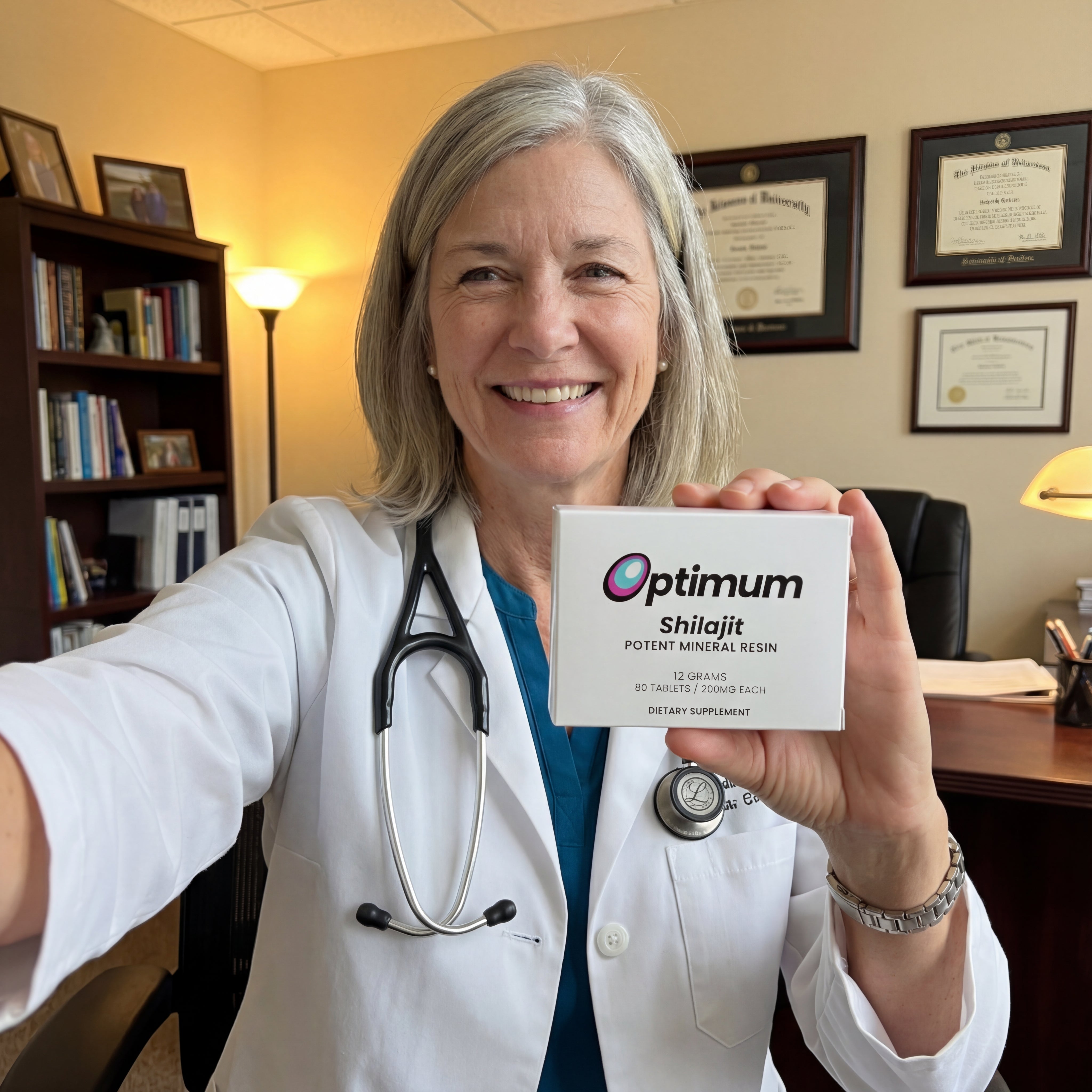
It is not on Amazon. Kathleen looked, because Amazon is where she buys almost everything.
They only sell it themselves, which is the only way there is a name on the box and somebody who has to answer for what is in it.
The Questions Women Ask Me Most
I never stopped exercising. Does that not protect my bones?
It helps and it is not the whole job, and Kathleen is the clearest case of that I have written up. She played 3 mornings a week for 11 years with a spine at minus 2.6.
Loading a bone tells it to build. What decides whether it can act on that instruction is the signal, and the signal is what goes quiet at menopause.
My ankle broke doing something ordinary. Does that mean I have osteoporosis?
It means it is worth a scan. Osteoporosis is silent until something breaks, which is why a break from something ordinary is information and not bad luck.
Nobody offered Kathleen a scan for 4 years. She asked for it herself in the end.
Is this a hormone?
No. It adds no estrogen to your body. It supports your body's own estrogen signaling, which is a different thing, and it is why they were able to study it against estrogen receptor positive breast cancer cells at all.
How long before I know?
Kathleen felt nothing in week 1 and almost did not reorder. Her hip stopped waking her in week 2, the mornings eased at week 4, and the scan was month 6. The guarantee runs 90 days for exactly this reason.
About the reviewer. Dr. Jennifer Norton is an orthopedic physician who has spent 19 years reading bone density scans. She writes about what those scans do and do not show, so that women can ask better questions about their own bones.