
Collagen After 45: What Type I and III Peptides Actually Do
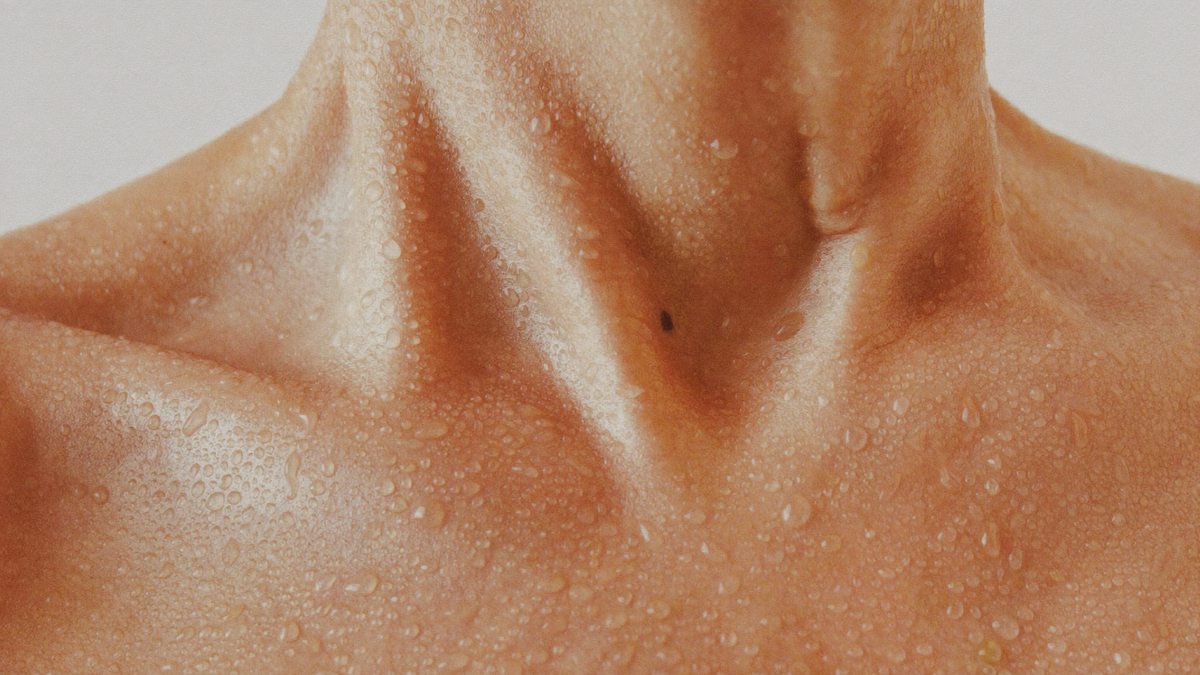
After 45, your body makes less collagen and breaks down more of it, which shows up as thinner skin, weaker nails, and stiffer joints. Type I and III collagen peptides are the hydrolyzed building blocks that give your body both the raw material and a measurable signal to rebuild that connective tissue. They work, but on a realistic timeline: think months of daily use, not a quick fix, and they work best when the minerals collagen synthesis depends on are there too.
Why does collagen drop after 45?
Collagen is the scaffolding protein your body is largely built from. It holds up your skin, anchors your hair, hardens your nails, and cushions your joints. From your mid-twenties on, you make a little less of it each year.
Around and after menopause, that gentle slope steepens. The body's collagen production slows while the natural breakdown continues, so the balance tips toward loss. The visible result is familiar: skin that creases and thins, nails that split, hair that loses body, and joints that feel less forgiving in the morning.
The encouraging part is that this is a supply problem, and supply is something you can address. Give the body the right building blocks and a reason to use them, and it keeps rebuilding.
What are type I and III collagen peptides?
There are several types of collagen, but two do most of the work that matters to a woman over 45.

- Type I is the most abundant collagen in the entire body. It gives skin, bone, tendon, and nails their tensile strength, the resistance to stretching and tearing.
- Type III usually sits right alongside type I in skin and blood vessels. It contributes suppleness and elasticity, the bounce-back quality skin loses with age.
Grass-fed bovine collagen is naturally rich in both type I and type III, which is exactly the pairing skin, hair, and nails draw on. "Peptides" means the collagen has been hydrolyzed, broken into short fragments small enough to absorb. Whole collagen is too large to cross the gut intact, so hydrolyzing it is what makes an eaten protein into a usable one.
Once absorbed, those peptides circulate in the blood and reach the tissues that build with them. That is the difference between collagen that sits in your stomach and collagen that does something.
What does the research actually show?
The strongest evidence is that supplementing collagen peptides raises the body's own collagen activity, not just blood protein.

Neltner and colleagues (2022) ran an 8-week controlled trial measuring Pro-C1alpha1, a marker of new type I collagen synthesis. It rose 94 percent at 500 mg a day and 165 percent at 1,000 mg a day versus placebo, while a marker of collagen breakdown dropped 29 percent at the 500 mg dose. In plain terms, the body built more and broke down less.
That trial was conducted in men, and it lines up with the women's research we hold. Das (2019) found that shilajit switched on the skin's collagen and blood-vessel genes in healthy women, improving skin microcirculation. Das (2016) measured the same family of collagen genes climbing several-fold in human muscle tissue, with the single largest collagen gene rising more than fivefold.
Read together, the picture is consistent across sexes and across tissues: collagen support raises the body's own collagen machinery. The trials are simply measuring the same rebuilding from different angles.
Skin, hair, nails, and joints: what to realistically expect
Collagen is not a cosmetic that sits on the surface. It is a raw material the body distributes wherever it is rebuilding, so the benefits show up across several tissues.

- Skin: better hydration and firmness as type I and III are replenished. This is usually the slowest to show, because skin turns over gradually.
- Hair and nails: often the first noticeable change, with nails growing stronger and hair feeling fuller, frequently within 8 to 12 weeks.
- Joints: more comfortable movement as the connective tissue around the joint is supported. Fulvic acid has even been shown to raise collagen output in cartilage cells in the lab (Schepetkin et al., 1999).
Set the expectation honestly: this is a rebuilding process measured in months. The women who are happiest with collagen are the ones who took it daily and gave it a full season before judging.
How collagen fits the whole-body picture
Collagen peptides supply the protein, but the body cannot assemble collagen from protein alone. It needs cofactors and minerals to do the construction, and minerals to lock the finished fibers into place.

Two threads matter here:
- Minerals feed synthesis. Building and cross-linking collagen draws on trace minerals, which is where a whole-food mineral source like shilajit complements the peptides. Shilajit even switched on collagen genes on its own in the Das studies, so the two approaches push the same goal.
- Silicon cross-links the fibers. Silicon, the mineral in bamboo silica, helps weave collagen strands into stronger, more resilient fibers, which is why it shows up in skin, hair, and nail research.
That is the logic behind pairing collagen with minerals and silica rather than taking it in isolation. You are giving the body the brick, the mortar, and the trowel at the same time.
How to take collagen, and how long it takes
Keep it simple and keep it daily. A typical serving of hydrolyzed collagen peptides is around 10 to 20 grams a day, stirred into coffee, tea, or a smoothie. It is flavorless in the unflavored form, so it disappears into whatever you are already drinking.
A realistic timeline:
- Weeks 8 to 12: nails and hair tend to respond first.
- Months 3 and beyond: skin firmness and joint comfort build as the deeper tissue rebuilds.
The one thing that decides whether collagen works for you is consistency. Optimum's grass-fed collagen is type I and III, unflavored, and made by a family-owned company in Florida that publishes its testing. Take it every day, pair it with your minerals, and give it the season it needs.
Common questions about collagen after 45
What is the difference between type I and type III collagen?
Type I is the most abundant collagen in the body and gives skin, bone, tendon, and nails their tensile strength. Type III often sits alongside type I in skin and blood vessels and contributes suppleness and elasticity. Skin and hair rely heavily on both, which is why grass-fed peptides supplying type I and III suit a woman after 45.
How long does collagen take to work?
Plan in months, not days. Many people notice nails and hair first, often within 8 to 12 weeks, with skin and joint comfort building over a similar or slightly longer window. Collagen is a rebuilding process, so daily consistency is what produces the result.
Does collagen actually reach my skin, or is it just digested?
Hydrolyzed collagen is broken into small peptides that are absorbed and circulate in the blood. Human research shows that supplementing these peptides raises the body's own collagen synthesis markers, so it supplies both raw material and a signal to rebuild rather than simply being burned for protein.
Do I need minerals for collagen to work?
Yes. Building collagen depends on cofactors and trace minerals, and silicon helps cross-link collagen into stronger fibers. That is why pairing collagen peptides with a whole-food mineral source such as shilajit supports the same goal from two directions.
Grass-fed type I and III collagen
Optimum's Grass-Fed Collagen peptides are hydrolyzed type I and III, unflavored so they disappear into your morning coffee. Pair them with your minerals and give them a season. Family-owned out of Florida, tested and published in full.
See Grass-Fed CollagenSources
- Neltner TJ, et al. "The effects of a collagen peptide supplement on markers of collagen synthesis and degradation: an 8-week trial." J Diet Suppl. 2022. PubMed
- Das A, et al. "The Human Skin Transcriptome and Microcirculation Response to Shilajit Supplementation in Healthy Women." 2019. PubMed
- Das A, et al. "Skeletal muscle transcriptome response to shilajit supplementation (collagen and ECM gene cluster)." 2016. PubMed
- Schepetkin I, et al. "Fulvic acid stimulates type II collagen secretion in chondrocytes." 1999. PubMed
- "Fulvic acid and collagen cross-linking chemistry (animal model)." 2005. PubMed