
Skin Changes After 45: Collagen, Antioxidants, and What Holds Up
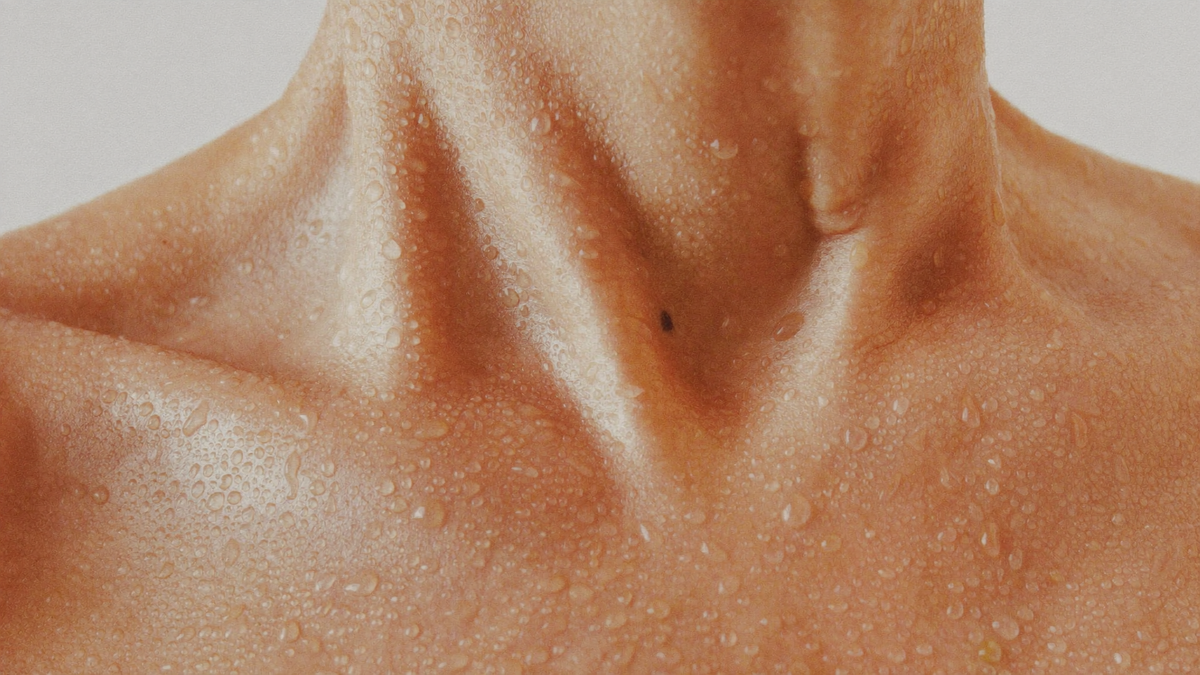
Skin changes after 45 come down to two slow shifts. You make less collagen, the protein scaffold that keeps skin firm and springy, and your skin takes on more oxidative stress, the everyday wear from free radicals. The good news is that both are things you can support. Feeding your body the raw materials it rebuilds with, the collagen building blocks, antioxidants, and trace minerals, is the most evidence-backed way to help skin stay resilient. None of it is a quick fix. It is a steady, every-day kind of support, and the research is clearest when you stay consistent.
What actually happens to your skin after 45?
Three things shift at once, and they feed each other.
First, the collagen scaffold thins. Collagen is the protein mesh in the deeper layer of skin that gives it structure and bounce. Production slows steadily from your late twenties, and the drop picks up speed in the years around menopause.
Second, the skin holds less water. The same deeper layer carries the molecules that bind moisture, so as it thins, skin looks drier and finer lines settle in.
Third, the daily damage load goes up. Sun, pollution, and normal metabolism all create free radicals, and over decades that oxidative stress breaks down collagen faster than the skin replaces it.
So thinner skin, less moisture, and faster breakdown all arrive together. That is why skin can seem to change quickly in your late forties and fifties, even though the underlying slide started years earlier.
Why does collagen drop, and why does it matter for skin?
Collagen matters because it is the structure. Think of the deeper layer of skin as a mattress. Collagen is the springs, and when there are fewer of them, the surface above settles, creases, and loses its snap-back.

Type 1 and type 3 collagen are the two that dominate skin. Type 1 is the strong, rope-like one that gives firmness. Type 3 is the finer mesh that supports it, more of it in younger skin. Both fall off with age, and the type 3 share drops faster, which is part of why mature skin feels thinner.
Here is the part worth holding onto. Your skin never stops being able to build collagen. The machinery is still there. It just needs the signal to switch on and the raw materials to build with. That is exactly where the supplement evidence comes in.
Can supplements rebuild skin collagen, or is that a myth?
The honest answer is that the right ones offer real, gradual support, and the research is stronger than most people expect.

Start with collagen peptides, the building-block side. In a placebo-controlled trial, Proksch and colleagues (2014) gave women specific collagen peptides daily and measured better skin elasticity after eight weeks, with the gain holding after the supplement stopped. Collagen peptides are simply collagen broken into small fragments your gut absorbs, supplying the glycine and proline your skin reassembles into its own collagen. It is raw material, delivered.
Then there is the signal side, where shilajit is interesting. Das and colleagues (2019) gave shilajit to middle-aged women for 14 weeks and looked directly at the skin. The genes that build collagen and grow new micro-blood-vessels switched on, and skin perfusion improved. The body was not just handed parts, it was prompted to make its own.
That fits a wider pattern. In an earlier muscle-biopsy study, Das and colleagues (2016) found shilajit switched on a cluster of connective-tissue genes, with several collagen genes running at four to five times their usual level. And Neltner and colleagues (2022) measured the marker of brand-new type 1 collagen and watched it climb between 94 and 165 percent over placebo, dose-dependent. In plain terms, the body was laying down new collagen at nearly double to more than double the normal rate.
Two of those trials, Neltner and an earlier strength study by Keller and colleagues (2019), were run in men, and they line up cleanly with the women's evidence rather than standing apart from it. Das (2019) saw the collagen genes switch on in women's skin, Das (2016) saw the same gene cluster light up, and Keller saw markers of collagen breakdown fall during hard training. Different groups, different tissues, one coherent story about collagen.
So no, it is not a myth. The realistic frame is this: collagen peptides hand your skin the bricks, and a whole-food mineral complex like shilajit helps switch the bricklayers back on. Neither works overnight. Both work on the timeline skin actually moves on.
What do antioxidants have to do with skin aging?
A large share of visible aging is oxidative, so antioxidants are not a side note here, they are central.

Every time your cells turn food into energy, and every time sun or pollution hits your skin, free radicals are created. Left unchecked, they degrade collagen and elastin and speed up the breakdown side of the equation. Calming that load lets the rebuilding side keep up.
This is where fulvic acid, one of the two active compounds in shilajit, earns attention. Carrasco-Gallardo and colleagues (2012) describe it as both an electron donor and acceptor, the chemistry behind a strong antioxidant. A 2018 review by Winkler and Ghosal found fulvic acid lowers markers of inflammation and improves oxidative-stress measures. And separate lab work showed fulvic acid influences how collagen cross-links and holds its structure (fulvic acid, mouse skin, 2005).
The picture is consistent across the body's defenses:
- It mops up free radicals, the same daily load that wears on skin.
- It quiets inflammatory signaling, which otherwise pushes collagen breakdown.
- It supports the structural chemistry that keeps the collagen you do make intact.
Human trials measuring fulvic acid against skin endpoints specifically are still catching up to chemistry that is already well mapped. The antioxidant behavior of fulvic and humic acids is one of the most-studied things about them, which is why it can be stated plainly rather than hedged.
How do minerals and the whole-body picture fit in?
Skin is built and repaired by the same body that runs everything else, so the minerals matter more than they get credit for.

Collagen is not just protein. Building and cross-linking it depends on trace minerals working as cofactors. Silicon helps lay down and stabilize the collagen network. Zinc and copper are part of the enzymes that mature and link collagen fibers. Run low on the small stuff and the building slows, no matter how much protein you eat.
This is the case for a whole-food mineral approach. A single isolated mineral tablet gives you one element as an inorganic salt. Shilajit delivers more than 80 trace minerals together, bound to organic carriers, the way minerals arrive in real food. Fulvic and humic acids are natural chelators, which means they grab mineral ions and carry them in a form your body recognizes, the single most-studied property of these compounds.
That is the whole-body weave in one line: collagen gives skin its structure, antioxidants protect it, energy from your mitochondria powers the repair, and trace minerals are the quiet cofactors that let all of it happen. Skin is the visible readout of how well-supplied the rest of you is.
What actually holds up, and what is hype?
Here is the calm, sorted version, so you can spend your effort where it counts.
| Approach | What the evidence supports |
|---|---|
| Daily sun protection | The single biggest lever. It preserves the collagen you already have. |
| Collagen peptides | Gradual gains in elasticity and hydration in controlled trials, over weeks to months. |
| Antioxidant support | Strong rationale and mechanism for slowing oxidative breakdown of collagen. |
| Whole-food trace minerals | The cofactors collagen-building enzymes need to work at all. |
| Overnight "miracle" claims | Hype. Skin turns over slowly. Anything promising days is selling, not helping. |
The thread through all of it is patience plus consistency. Skin remodels on a cycle measured in weeks and months, so the people who see the most are the ones who support their skin daily and give it a full season to respond.
Optimum is family-owned, out of Florida. Every batch of what we make is third-party tested, with results published in full before you buy, because the most useful thing we can hand a 45-plus reader is proof, not adjectives. If you ever want to talk it through with a real person, our team is at (515) 890-7387.
Common questions about skin after 45
Does collagen powder actually help skin, or is it hype?
Controlled human trials of specific collagen peptides have shown better skin elasticity and hydration over a few months of daily use. Collagen supplies the amino acid building blocks your skin rebuilds with, so it is genuine support rather than a quick fix. Expect changes to show up gradually across eight to twelve weeks, not days.
At what age does skin collagen start to drop?
The slow decline begins in the late twenties, and the pace picks up in the years around menopause. That timing is why so many women first notice thinner, drier, less springy skin in their late forties and fifties, even though the slide started long before.
Do antioxidants really matter for skin aging?
Yes. A large share of visible aging is driven by oxidative stress, the daily damage from free radicals created by sun, pollution, and normal metabolism. Antioxidants help neutralize that load, which lets the skin's rebuilding side keep pace with the breakdown side.
How long until I see a difference from supplements?
Skin turns over on a slow cycle, so most people need eight to twelve weeks of consistent daily use before changes in firmness, hydration, or smoothness become noticeable. Consistency matters more than a big dose. The studies that show the clearest results are the ones that ran for a full season.
What is the single most useful thing for skin after 45?
Daily sun protection does the most to preserve the collagen you have. After that, supporting your body's raw materials, the collagen building blocks, antioxidants, and trace minerals it rebuilds with, is the most evidence-backed step you can take. The two work together: protect what is there, supply what it needs to renew.
Grass-Fed Collagen, the building blocks your skin rebuilds with
Pure type 1 and type 3 collagen peptides, the raw material your skin reassembles into its own collagen. Unflavored or chocolate, mixes into anything. Family-owned out of Florida, made for steady, every-day support.
See Grass-Fed CollagenSources
- Proksch E, et al. "Oral supplementation of specific collagen peptides has beneficial effects on human skin physiology: a double-blind, placebo-controlled study." Skin Pharmacol Physiol. 2014;27(1):47-55. PMID 23949208. pubmed.ncbi.nlm.nih.gov/23949208
- Das A, et al. "Skin Transcriptome of Middle-Aged Women Supplemented With Natural Herbo-mineral Shilajit Shows Induction of Microvascular and Extracellular Matrix Mechanisms." J Med Food. 2019. PMID 31161927. pubmed.ncbi.nlm.nih.gov/31161927
- Das A, et al. "The Human Skeletal Muscle Transcriptome in Response to Oral Shilajit Supplementation." J Med Food. 2016;19(7):701-709. PMID 27414521. pubmed.ncbi.nlm.nih.gov/27414521
- Neltner TJ, et al. "The effects of Shilajit supplementation on serum pro-C1alpha1, a biomarker of type 1 collagen synthesis: a randomized controlled trial." J Diet Suppl. 2022. PMID 36546868. pubmed.ncbi.nlm.nih.gov/36546868
- Keller JL, et al. "The effects of Shilajit supplementation on fatigue-induced decreases in muscular strength and serum hydroxyproline levels." J Int Soc Sports Nutr. 2019;16(1):3. PMID 30728074. pubmed.ncbi.nlm.nih.gov/30728074
- Carrasco-Gallardo C, Guzman L, Maccioni RB. "Shilajit: A Natural Phytocomplex with Potential Procognitive Activity." Int J Alzheimers Dis. 2012;2012:674142. PMID 22482077. pubmed.ncbi.nlm.nih.gov/22482077
- Winkler J, Ghosal S. "The Systematic Review on the Biological Effects of Fulvic Acid." J Diabetes Res. 2018. pmc.ncbi.nlm.nih.gov/articles/PMC6151376
- Fulvic acid and collagen cross-linking chemistry (mouse model), 2005. PMID 15641683. pubmed.ncbi.nlm.nih.gov/15641683
- Stohs SJ. "Safety and efficacy of shilajit (mumie, moomiyo)." Phytother Res. 2014;28(4):475-479. PMID 23733436. pubmed.ncbi.nlm.nih.gov/23733436