
Silicon: The Bone Mineral Most Women Have Never Heard Of
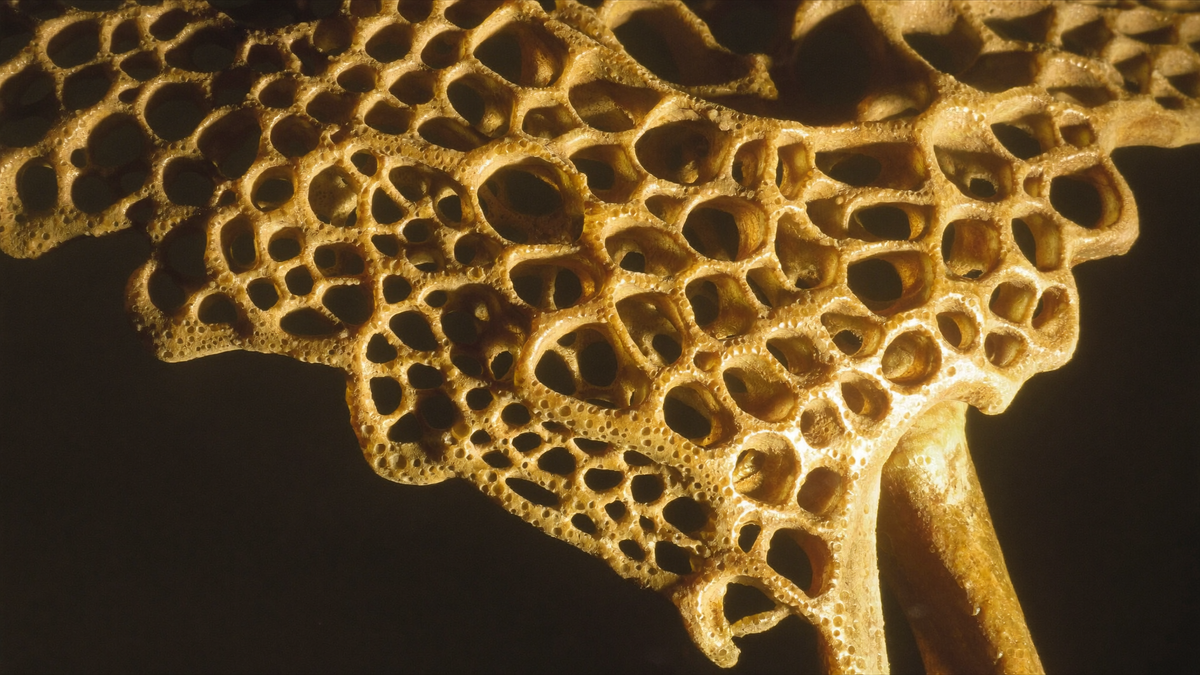
Silicon is a trace mineral that does a job calcium cannot. It helps build the collagen scaffold your bones, skin, and nails are made from, the flexible framework that minerals harden onto. In a study of nearly 3,000 adults, the people who got the most silicon from food had stronger bones than those who got the least. Most women over 45 fall short of it, because refined diets and depleted soils carry less than whole foods once did. It is one of the quietest mineral gaps there is, and one of the easiest to close.
What is silicon, and why does your body need it?
Silicon is one of the trace minerals, the ones your body needs in small amounts rather than large ones. You will sometimes see it written as silica, which is simply silicon bound to oxygen, the form it takes in plants and supplements. Your gut absorbs it as orthosilicic acid, the small soluble form your cells can actually use.

Calcium gets all the attention in bone, and it deserves some of it. But calcium is the hard mineral that fills a structure in. It is not what holds the structure together. That job belongs to a protein scaffold, and silicon is one of the materials that scaffold is built from.
This is why silicon sits quietly under so much of the body at once. Your bones, your skin, your hair, your nails, the walls of your blood vessels, all of them lean on the same connective tissue. Feed that tissue and you are feeding all of them.
How does silicon actually build bone?
Think of bone the way an engineer thinks of reinforced concrete. The collagen is the steel rebar, a flexible web that gives bone its give and its tensile strength. The minerals are the concrete poured around it, the hardness. Take away the rebar and the concrete cracks. Take away the concrete and the rebar bends.

Silicon is part of how the rebar gets built. The classic laboratory work by Edith Carlisle in the 1970s showed that silicon is required to form healthy collagen and connective tissue, and that animals short on it grew weaker, poorly formed bone. Later reviews, including Jugdaohsingh (2007), traced the mechanism: silicon supports the crosslinks that lock collagen fibers into a strong, organized matrix, the matrix that calcium then mineralizes.
So silicon is not competing with calcium. It is the step before calcium. It helps lay down the framework, then the mineral has something solid to bind to. A bone built on a strong collagen scaffold holds its mineral better than one built on a weak one.
What does the research show on silicon and bone density?
The strongest signal comes from population data. Jugdaohsingh and colleagues (2004) looked at 2,847 adults in the Framingham study and found that the people in the top fifth for dietary silicon had hip bone density roughly 10 percent higher than those in the bottom fifth. In that same dataset, the silicon link was larger than the calcium link, which is a striking thing for a mineral most people have never heard of.

There is controlled trial evidence too. Spector, Calomme, and colleagues (2008) ran a placebo-controlled trial in women with low bone mass. Adding a soluble form of silicon to calcium and vitamin D raised markers of new bone formation beyond what calcium and vitamin D did alone. A smaller pilot in postmenopausal women (Li, 2010) saw the same direction, with silicon-rich intake nudging bone-formation markers upward.
Here is the honest scope, stated as a clause and not a verdict: the controlled silicon trials are still catching up to chemistry that has been understood for half a century. The mechanism is settled. The population data is consistent. What that means for your day is simple. Silicon is one of the materials a strong skeleton is made from, and getting enough of it is a sensible thing to do, not a gamble.
Silicon for hair, skin, and nails too
The same scaffold that holds up bone also holds up the parts of you that you see in the mirror. So the silicon story does not stop at the skeleton.

- Wickett and colleagues (2007) ran a placebo-controlled trial in women with fine hair. Silicon supplementation improved the tensile strength of their hair and reduced nail brittleness over the study period.
- Barel and colleagues (2005) found that the same form of silicon improved skin firmness and roughness markers, along with nail and hair condition, in a controlled trial.
None of this is a separate mechanism. It is one mechanism with several addresses. Silicon helps build collagen, collagen is the structure under skin, hair follicles, nail beds, and bone, and so a body that has enough silicon tends to show it in more than one place at once.
Why food alone may leave you short on silicon
Most women over 45 are getting less silicon than their grandmothers did, and not because they eat worse. Typical Western intake lands somewhere around 20 to 50 milligrams a day, and it drifts lower with age and with more refined, processed food.

Two things drive the gap. Refining strips silicon out, because the mineral concentrates in the bran and husk of grains that milling removes. And decades of intensive farming have left many soils lower in trace minerals than they once were, so even whole foods can carry less. The better food sources, for what it is worth, are whole grains, oats, green beans, leafy greens, and bananas.
This is the same pattern that shows up across the trace minerals as a group. It is rarely one dramatic deficiency. It is a wide, quiet shortfall across a dozen minerals your body needs in small amounts and a modern diet no longer reliably delivers. That is the gap a whole-food mineral complex is built to fill.
Where Optimum fits, and how to get enough
You can raise your silicon the simple way, by leaning on the foods above, and that is always worth doing. A whole-food supplement is the other lever, and it is where we built our Shilajit Trifecta to do real work.
The Trifecta brings together three materials that each handle a different part of the same job:
- Shilajit carries more than 80 trace minerals in a form your body recognizes, through fulvic acid, the small molecule that walks minerals across the cell membrane the way whole food does.
- Pearl powder supplies aragonite calcium, the same crystal form found in living bone, alongside a 17-amino-acid protein called conchiolin, the same kind of protein the matrix is built from.
- Bamboo silica is one of the richest plant sources of silicon, the crosslinking material this whole article is about. Bamboo delivers it as a whole-plant source, and silicon does the same job regardless of where it comes from.
Because bone is genuinely the subject here, the strongest single piece of evidence is worth stating plainly. In a 48-week trial in postmenopausal women with osteopenia, Pingali and colleagues (2022) found that every single woman in the treatment group reversed her osteopenia within 24 weeks, with bone density preserved and zero side effects recorded.
There is a second piece of human evidence worth adding here. A 2020 double-blind randomized controlled trial in 160 people (Sadeghi and colleagues) found that oral shilajit, known regionally as momiai, cut the average tibial-fracture healing time to about 129 days versus 153 days on placebo, roughly 24 days faster https://pubmed.ncbi.nlm.nih.gov/32310691/. That is human evidence of shilajit actively supporting bone rebuilding, not just slowing loss.
On safety, the record is reassuring. Zero serious adverse events have ever been reported across any human shilajit study. Every batch of ours is third-party tested, with all four heavy metals measured far below the USP safety limits, and we publish the full results before you buy. We are family-owned, out of Florida. The dose is two tablets with breakfast, where the minerals absorb best alongside food.
Common questions about silicon
Is silicon the same as silica?
Closely related. Silicon is the trace mineral itself. Silica is silicon bound to oxygen, the form it appears in as food and in supplements. Your body absorbs it as orthosilicic acid, the small soluble form your cells can use. When people say a supplement provides silica, they mean it provides silicon.
How much silicon do women over 45 usually get?
Roughly 20 to 50 milligrams a day in a typical Western diet, and it tends to fall with age and with more refined food. Whole grains, oats, green beans, leafy greens, and bananas are among the better sources, since silicon concentrates in the parts of grains that milling removes.
Does silicon really do more for bone than calcium?
It does a different job, and the two work together. In the Framingham data, the dietary-silicon link to hip bone density was actually larger than the calcium link, which surprised researchers. Silicon helps build the collagen scaffold, and calcium hardens onto it. You want both, not one instead of the other.
Is bamboo silica a good way to get silicon?
Bamboo is one of the richest plant sources of silicon there is. The mineral does the same work in the body no matter the source, supporting the collagen framework that bone, skin, hair, and nails are built on. We use bamboo silica in the Shilajit Trifecta for exactly that reason.
Is silicon safe to take every day?
Yes. Silicon has a long record of safe dietary intake, and your kidneys clear what the body does not use. The sensible approach is a third-party-tested whole-food formula at the recommended dose, taken consistently, rather than a megadose. Steady daily intake is where mineral support comes from.
Three materials, one strong scaffold
The Shilajit Trifecta brings together Altai shilajit, pearl powder, and bamboo silica, the carrier, the building material, and the crosslink your collagen scaffold runs on. Third-party tested, every heavy metal published in full. Family-owned out of Florida.
See the Shilajit TrifectaOptimum Shilajit
Purified shilajit resin from the Altai mountains, independently third party lab tested for heavy metals and mold, delivering 80+ trace minerals in fulvic-complexed form.
See Optimum ShilajitSources
- Jugdaohsingh R, et al. "Dietary silicon intake is positively associated with bone mineral density in men and premenopausal women of the Framingham Offspring cohort." J Bone Miner Res. 2004;19(2):297-307. PMID 14969400.
- Jugdaohsingh R. "Silicon and bone health." J Nutr Health Aging. 2007;11(2):99-110. (Review of the silicon and collagen-crosslink mechanism.)
- Spector TD, Calomme MR, et al. "Choline-stabilized orthosilicic acid supplementation as an adjunct to calcium/vitamin D3 stimulates markers of bone formation in osteopenic females: a randomized, placebo-controlled trial." BMC Musculoskelet Disord. 2008;9:85. PMID 18547426.
- Li Z, et al. "Silicon-rich mineral water and bone-formation markers in postmenopausal women" (pilot). 2010. PMC2967495.
- Wickett RR, Kossmann E, Barel A, et al. "Effect of oral intake of choline-stabilized orthosilicic acid on hair tensile strength and morphology in women with fine hair." Arch Dermatol Res. 2007;299(10):499-505. PMID 17960402.
- Barel A, Calomme M, et al. "Effect of oral intake of choline-stabilized orthosilicic acid on skin, nails and hair in women with photodamaged skin." Arch Dermatol Res. 2005;297(4):147-153. PMID 16205932.
- Carlisle EM. "Silicon: a possible factor in bone calcification." Science. 1970s foundational work on silicon and collagen formation.
- Pingali U, Nutalapati C. "Shilajit extract reduces oxidative stress, inflammation, and bone loss to dose-dependently preserve bone mineral density in postmenopausal women with osteopenia: a randomized, double-blind, placebo-controlled trial." Phytomedicine. 2022;105:154334. PMID 35933897.
- Sadeghi SMH, et al. "The effect of momiai (shilajit) on fracture healing: a randomized, double-blind, placebo-controlled clinical trial." 2020. n=160; healing time about 129 days vs 153 days on placebo. PMID 32310691. (Paywalled, URL cited.)