
Magnesium, Zinc, Selenium: The Trace Minerals Women Miss
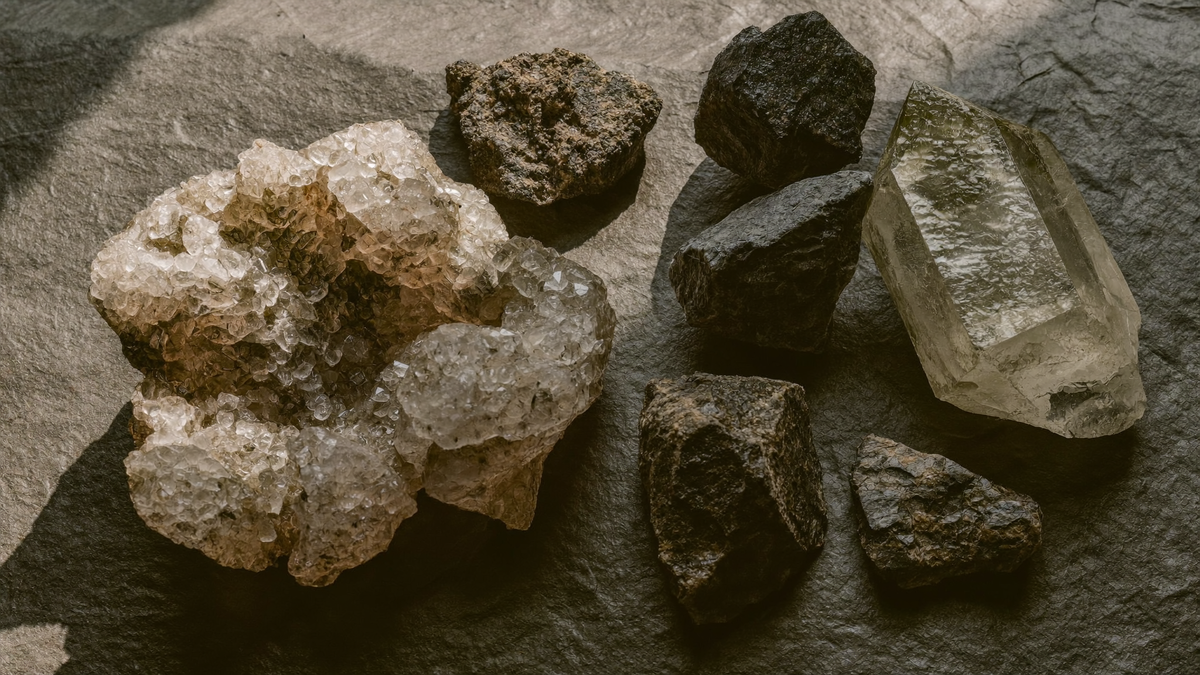
Three minerals quietly slip low for many women after 45: magnesium, zinc, and selenium. Together they run hundreds of small jobs, from steady energy to firm skin to a calm night's sleep. Yet modern soil and modern diets deliver less of them than they once did, and the gut absorbs less with age. The fix is not one mega-dose of a single mineral. It is getting a broad base of trace minerals in a form your body recognizes, the way whole food delivers them.
Which trace minerals do women over 45 actually miss?
Magnesium, zinc, and selenium are the three that most often run low, and they tend to run low together. Diet surveys in the US and UK keep finding a sizable share of older adults falling short of the recommended intake for at least one of them.

They matter because they are not optional extras. They are the spark plugs your everyday biology runs on:
- Magnesium helps turn food into usable cellular energy, relaxes muscles, and steadies sleep and mood.
- Zinc keeps skin, hair, and nails rebuilding and keeps your immune defenses staffed.
- Selenium is the engine behind your antioxidant defenses and helps your thyroid set your metabolic pace.
None of these is something you stockpile. Your body uses them daily and clears the excess, so a small steady supply matters more than an occasional big one.
Why does food fall short on minerals now?
Two reasons stack up: the food carries fewer minerals than it used to, and we absorb less of what is there as we age.
Thomas (2003) compared UK food-composition tables from 1940 against 1991 and found the mineral content of everyday vegetables had dropped sharply over those decades, magnesium among the minerals that fell by double digits. Intensive farming and depleted soil deliver produce that looks the same but carries a lighter mineral load.
The second half is your gut. Stomach acid tends to decline with age, and minerals need that acid to be freed from food and absorbed. So the same plate hands an older body fewer usable minerals than it did at 25.
Refining widens the gap further. Milling, processing, and stripping turn whole grains and foods into versions that have lost much of their original mineral content. A modern diet can be full and still come up short.
What does magnesium do, and why is it so easy to run low?
Magnesium powers more than 300 enzyme reactions, including the ones that convert food into ATP, the fuel every cell spends. It is also one of the most commonly low minerals in women's diets.

You feel magnesium most in three places:
- Energy. Without enough of it, the cell's energy line runs less smoothly, which can read as that flat, can't-get-going afternoon.
- Muscles and nerves. Magnesium helps muscles relax after they contract. Cramps, twitches, and tension can trace back to running low.
- Sleep and calm. It supports the systems that let the body wind down at night.
It drains easily, too. Stress, heavy caffeine, alcohol, and a processed diet all pull magnesium down or block it, which is why so many women run low without ever changing what they eat.
Zinc and selenium: small amounts, big jobs
Zinc and selenium are needed in tiny amounts, yet a shortfall shows up across the parts of you that are always rebuilding.
Zinc is a construction mineral. Your body leans on it to build skin, hair, and nails and to repair tissue, which is exactly the work that slows after 45. It also keeps your immune system staffed, so running low can mean catching every passing bug and healing slowly.
Selenium works upstream of all of that. It is built into the enzymes that neutralize free radicals, the everyday wear-and-tear molecules your body makes simply by turning food into energy. It is also essential for the thyroid, the gland that sets how fast your whole metabolism runs.
Because these jobs overlap with collagen, energy, and antioxidant defense, a quiet trace-mineral shortfall rarely stays in its lane. It tends to show up as several small things at once.
Why the form of a mineral matters as much as the amount
A mineral only counts once it reaches your cells, and the form it arrives in decides how much of it gets there. This is where whole-food minerals and isolated tablets part ways.

An isolated supplement usually delivers one mineral as an inorganic salt. Your gut has to convert it, and a high single dose can compete with other minerals for the same absorption doors. It works, especially for a confirmed deficiency, but it is a blunt tool.
Whole food delivers minerals differently. They arrive already bound to organic carrier molecules that escort them across the gut wall in a form the body recognizes. The best-studied of those carriers are fulvic and humic acids.
Carrasco-Gallardo and colleagues (2012) describe fulvic acid as an electron donor and acceptor, the chemistry that lets it grab mineral ions and shuttle them straight into the cell. This metal-binding behavior is the single most-studied property of fulvic and humic acids, mapped across decades of chemistry and animal work. It is the same route minerals locked inside whole food take to reach your cells, instead of washing straight through.
| An isolated single-mineral tablet | A whole-food mineral matrix | |
|---|---|---|
| What you get | One mineral, often a large dose | A broad base of trace minerals together |
| The form | An inorganic salt | Bound to organic carriers, like in food |
| Best for | A confirmed, specific deficiency | Broad, everyday trace-mineral support |
| How it reaches the cell | The gut converts it; minerals can compete | Chelated and carried in, the whole-food way |
They are not rivals. If a test shows you are low in one mineral, dose that one. For the wide, quiet base of trace elements a modern diet keeps coming up short on, the whole-food form is built for the job.
How does shilajit fit as a whole-food mineral source?
Shilajit is a whole-food mineral complex: more than 80 trace minerals already bound to the fulvic and humic acids that carry them in. It is closer to how nutrients show up in real food than to a single isolated tablet.

That packaging is the point. The carriers and the minerals arrive together, so the magnesium, zinc, selenium, and dozens of other trace elements are delivered in a form your cells know how to use. Winkler and Ghosal (2018) reviewed fulvic acid's antioxidant and inflammation-calming activity, the same supportive chemistry working alongside the mineral delivery.
The benefit web runs wider than minerals alone. In a human muscle-biopsy trial, Das and colleagues (2016) found that eight weeks of shilajit switched on the genes that build connective tissue, several of them running at four to five times their normal level, which is the collagen and structure side of the same whole-body story.
There is a clean-up angle, too. A 2024 review noted that the humic substances inside shilajit actively bind and help clear roughly a dozen unwanted metals, the same grabbing chemistry pointed at cleanup rather than delivery.
On safety, the record is reassuring. Zero serious adverse events have ever been reported across any human shilajit study, and a review by Stohs (2014) found it generally well tolerated across human and animal research. The one real variable is quality, which is why Optimum sources from the Altai mountains, purifies every batch, and tests for all four heavy metals through a US-accredited lab, with every result published in full before you buy. We are family-owned, out of Florida.
Common questions about trace minerals
Can't I just take a magnesium pill?
If a test confirms you are low in one specific mineral, a single-mineral dose is often the right call. The catch is that magnesium, zinc, and selenium tend to run low together, so topping up one in isolation can leave the wider base untouched. A broad trace-mineral source covers that base, then you add a targeted dose where a deficiency is confirmed.
How do I know if I am low in trace minerals?
Common everyday signs include flagging afternoon energy, muscle cramps or twitches, brittle nails, slower-healing skin, and frequent minor illness. None of these proves a deficiency on its own, but together they are a fair reason to look at how much your diet actually delivers, and in what form.
Does taking minerals with food help absorption?
Yes. Most minerals are absorbed more steadily alongside a meal. Optimum's dose is two tablets with breakfast, which is also why a whole-food style complex, where minerals arrive already bound to organic carriers, tends to be gentler on the stomach than a high-dose isolated salt taken alone.
Is it safe to take a trace-mineral supplement every day?
From a purified, third-party-tested source, daily use at the recommended dose is exactly how trace-mineral support is meant to work. Zero serious adverse events have ever been reported across any human shilajit study. The one real variable is quality, which is why the certificate of analysis matters more than any claim on the front of the package.
A whole-food mineral base, tested in full
Pure Altai shilajit carries more than 80 trace minerals in the form your body recognizes. Purified, pressed into tablets, and tested for all four heavy metals by a US-accredited laboratory, with every result published before you buy. Family-owned out of Florida.
See Pure ShilajitSources
- Thomas D. "A Study on the Mineral Depletion of the Foods Available to us as a Nation over the period 1940 to 1991." Nutrition and Health. 2003;17(2):85-115.
- Carrasco-Gallardo C, Guzman L, Maccioni RB. "Shilajit: A Natural Phytocomplex with Potential Procognitive Activity." Int J Alzheimers Dis. 2012;2012:674142. PMID 22482077.
- Winkler J, Ghosal S. "The Systematic Review on the Biological Effects of Fulvic Acid." (review of fulvic acid, immune modulation, TNF-alpha, oxidative stress) 2018. PMC6151376.
- Das A, et al. "The Human Skeletal Muscle Transcriptome in Response to Oral Shilajit Supplementation." J Med Food. 2016;19(7):701-709. PMID 27414521.
- Heavy metals in shilajit: review of geological trace metals and the metal-binding role of humic substances. 2024. PMID 38393486.
- Stohs SJ. "Safety and efficacy of shilajit (mumie, moomiyo)." Phytother Res. 2014;28(4):475-479. PMID 23733436.