
Hair Thinning After Menopause: The Structural Fix
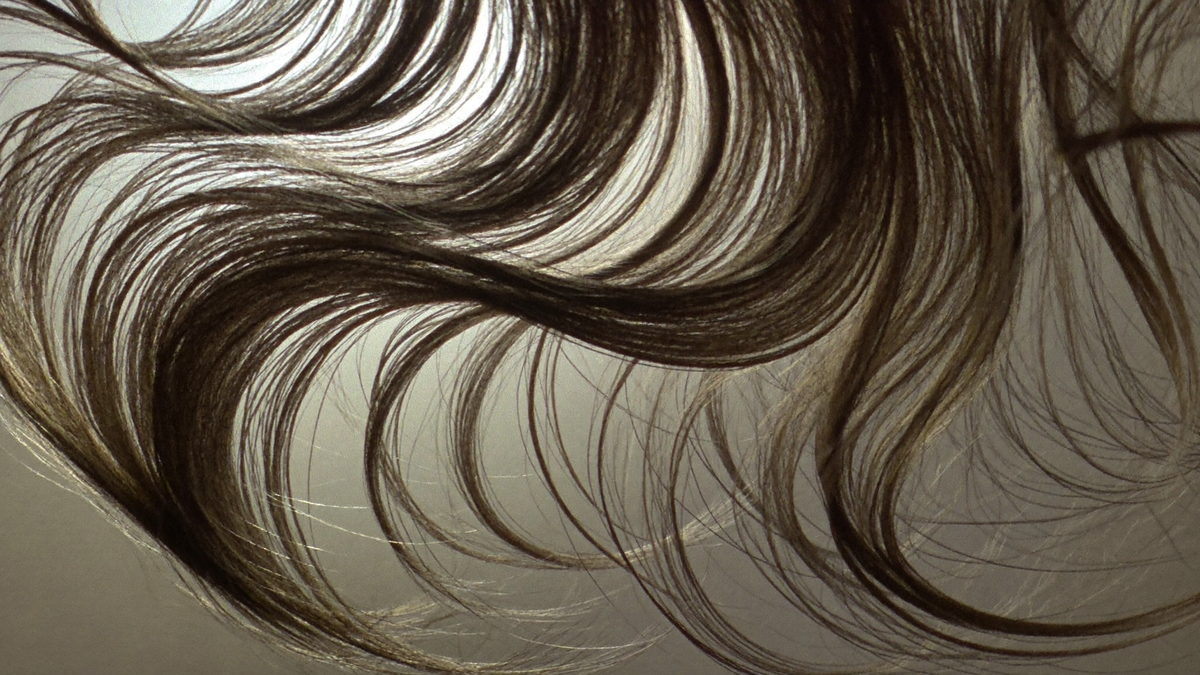
Hair thins after menopause largely because the collagen scaffold around each follicle weakens and its trace mineral supply runs low, so strands grow finer and snap more easily. In a 2007 placebo controlled trial, silicon supplementation improved hair strength and elasticity and reduced nail brittleness in women with fine hair. The structural approach supplies silicon, collagen building blocks and trace minerals together. Nails respond first, then hair over 3 to 6 months.
Why does hair thin after menopause?
The short version: the scaffold weakens and the supply runs low. Hair is not just the strand you see. It grows out of a follicle that sits in living, collagen-rich tissue, and that tissue is what holds everything anchored, nourished, and resilient.
After menopause, two structural things shift at once:
- The collagen and connective tissue that surround and support each follicle become thinner and less elastic, so the anchor and the cushion both soften.
- The steady supply of trace minerals and the blood flow that carry nutrients to the follicle tend to drop, so the strand is built from less.
The visible result is familiar: finer strands, more breakage, less fullness at the part and the temples. It reads as "losing my hair," but a lot of it is hair that is growing in weaker and shorter, on a scaffold that needs rebuilding. That reframing matters, because a structural problem has a structural answer.
What is the "structural fix"?
The structural fix is to supply the materials your body uses to rebuild the scaffold, rather than chasing the symptom at the strand. Three materials do the heavy lifting, and they work as a set.

- Silicon, the mineral the body uses to build and crosslink collagen.
- Collagen, the protein scaffold the follicle is anchored in and the skin is built on.
- Trace minerals, the wide base of elements the follicle draws on to grow each strand.
There is a simple way to picture how they fit together. Collagen is the rebar, the flexible frame. The minerals are the concrete that fills it in. And silicon is what crosslinks the rebar so the whole structure holds its shape under load. Calcium without silicon, as the saying in the bone world goes, is rebar without concrete. Hair and skin run on the same logic.
This is why the structural approach is a set, not a single ingredient. You are rebuilding a matrix, and a matrix needs its frame, its fill, and its crosslinks together.
What does silicon do for hair and nails?
They call silicon the beauty mineral, and the name earns itself. It is the one your body uses to build collagen, and collagen is the scaffold your hair, skin, and nails are all built on.

The human evidence here is genuinely good, and it is in women. In a placebo-controlled trial, silicon supplementation improved the tensile strength and elasticity of hair and reduced nail brittleness in women with fine hair (Wickett and colleagues, 2007). A companion trial reported the same kind of gains across skin, hair, and nails (Barel and colleagues, 2005). In plain terms: stronger strands that bend instead of snap, and nails that stop splitting at the edges.
The mechanism is well mapped. Silicon is used in the chemistry that crosslinks collagen fibers, which is what gives the collagen matrix its strength and spring (Jugdaohsingh, 2007). Stronger crosslinks mean a sturdier scaffold, and a sturdier scaffold is what a thinning strand is missing.
One honest note on form. Most of this gold-standard research used a specific, highly absorbable form of silicon, and bamboo silica delivers the same element at a higher dose to make up for lower per-milligram uptake. The element doing the work, and the collagen-crosslinking job it does, is the same either way.
How does collagen fit into the hair story?
Collagen is the scaffold itself, so its condition sets the ceiling for everything the silicon and minerals are trying to reinforce. Rebuild the collagen and you rebuild the bed the follicle grows from.

Here is where shilajit enters, and the evidence connects cleanly. Shilajit does not just supply collagen, it appears to switch on the body's own collagen-building machinery.
- Das and colleagues (2019) gave shilajit to middle-aged women for 14 weeks and found their skin switched on the genes that build collagen and new blood vessels, with measurably better skin blood flow. Better perfusion is exactly what a follicle needs.
- Das and colleagues (2016) took muscle biopsies after eight weeks and saw the connective-tissue genes light up, several running at four to five times their normal level.
- Neltner and colleagues (2022) measured the marker of new type-1 collagen synthesis directly and watched it climb between 94 and 165 percent over placebo, dose-dependently.
That Neltner trial was run in active men, and on its own that might sound like a gap. It is not, because it lines up with the women's data: Das (2019) showed shilajit switching on collagen-building genes in middle-aged women, and Das (2016) confirmed the same connective-tissue genes turning on. The men's collagen-synthesis numbers and the women's collagen-gene activation are two views of one mechanism. Translated to the mirror, more new collagen means a firmer, better-fed bed for hair to grow from.
Where do minerals and shilajit come in?
The minerals are the fill, and getting them to the follicle is the part most supplements miss. This is where shilajit does something quietly clever.

Shilajit carries more than 80 trace minerals, and its fulvic acid is one of the most-studied mineral carriers in chemistry. Fulvic acid is a very small molecule that binds mineral ions and walks them across the cell membrane in a form your body recognizes, the same route minerals take when they arrive in whole food (Carrasco-Gallardo and colleagues, 2012). Supplying minerals is one thing; delivering them is another, and delivery is fulvic acid's specialty.
This is also why hair, skin, and nails tend to move together, and why bone and joints sit on the same story. They are all collagen-and-mineral matrices. Feed the matrix and you are not treating one symptom, you are supporting the shared structure underneath several of them at once. That whole-body weave is how a mineral complex actually works: not a single targeted effect, but a wide, quiet base of support.
Put the set together and the logic closes. Silicon crosslinks the collagen, collagen rebuilds the scaffold, and fulvic acid carries the minerals that fill it in. Three jobs, one matrix.
How long until you see a difference?
Nails first, then hair, and it is measured in months, not days. This is structural rebuilding, and structure changes slowly.
Nails usually respond first, often within a couple of months, simply because they grow faster and turn over sooner. Hair follows its own growth cycle, so the strands you are strengthening today take time to grow out to where you can see and feel the difference.
- Weeks 1 to 8: nails often start splitting and peeling less. Little visible hair change yet, which is normal.
- Months 3 to 6: new growth comes in stronger, breakage eases, and fullness at the part and temples improves for many people.
- Beyond 6 months: the steady, compounding payoff, as more of your hair is hair that grew in on a rebuilt scaffold.
The single biggest predictor of results is consistency. Two tablets with breakfast, every day, gives the matrix the steady supply it needs to rebuild. The people who are happiest with their hair are almost always the ones who stayed with it through the quiet first stretch.
Common questions about thinning hair after menopause
Is hair thinning after menopause permanent?
A lot of it is hair growing in finer and weaker rather than gone for good, and that is the part a structural approach can influence. Rebuilding the collagen scaffold and restoring the mineral supply gives new growth a stronger bed to grow from. It is gradual, and consistency over months is what makes the difference.
Will collagen powder alone fix thinning hair?
Collagen helps, because it is the scaffold, but it is one of three materials. Without silicon to crosslink the collagen, and without the trace minerals the follicle draws on, you are filling part of the matrix and skipping the rest. The structural approach works best as a set: silicon, collagen, and the carried minerals together.
What is the difference between silicon and silica?
Silicon is the element your body actually uses to build collagen. Silica is a natural compound, such as the kind drawn from bamboo, that delivers silicon to the body. Silica is the source; silicon is the working part. The collagen-crosslinking job is the same regardless of which source it came from.
How much should I take, and when?
Two tablets with breakfast is the simple daily routine. The minerals absorb better alongside food, and a steady once-a-day rhythm is what keeps the matrix supplied. Structural support is about the daily habit, not a big occasional dose.
Is this safe to take alongside other supplements?
Shilajit has a strong safety record, with zero serious adverse events ever reported across any human shilajit study. Some people notice a mild digestive adjustment in the first week or two, the same as starting any mineral-dense supplement. If you want to talk it through, our team is real people at susan@liveoptimum.co.
Shilajit Trifecta, the structural set
Pure Altai shilajit to carry the minerals in, plus the collagen building blocks and the silicon that crosslinks them. The whole matrix in one daily routine. Third-party tested, published in full, family-owned out of Florida.
See Shilajit TrifectaOptimum Shilajit
Purified shilajit resin from the Altai mountains, independently third party lab tested for heavy metals and mold, delivering 80+ trace minerals in fulvic-complexed form.
See Optimum ShilajitSources
- Wickett RR, Kossmann E, Barel A, et al. Choline-stabilized orthosilicic acid supplementation: effect on hair tensile strength and morphology in women with fine hair. 2007. PMID 17960402. pubmed.ncbi.nlm.nih.gov/17960402 (retrieved June 2026).
- Barel A, Calomme M, et al. Effect of oral silicon supplementation on skin, nails, and hair in women with photodamaged skin. 2005. PMID 16205932. pubmed.ncbi.nlm.nih.gov/16205932 (retrieved June 2026).
- Jugdaohsingh R. "Silicon and bone health." J Nutr Health Aging. 2007;11(2):99-110 (mechanism: silicon and collagen crosslinking). pmc.ncbi.nlm.nih.gov/articles/PMC2658806 (retrieved June 2026).
- Das A, et al. "Skin transcriptome of middle-aged women supplemented with natural herbo-mineral shilajit shows induction of microvascular and extracellular matrix mechanisms." 2019. PMID 31161927. pubmed.ncbi.nlm.nih.gov/31161927 (retrieved June 2026).
- Das A, et al. "The human skeletal muscle transcriptome in response to oral shilajit supplementation." J Med Food. 2016;19(7). PMID 27414521. pubmed.ncbi.nlm.nih.gov/27414521 (retrieved June 2026).
- Neltner TJ, et al. "The effects of shilajit supplementation on serum Pro-C1alpha1, a biomarker of type 1 collagen synthesis: a randomized controlled trial." 2022. PMID 36546868. pubmed.ncbi.nlm.nih.gov/36546868 (retrieved June 2026).
- Carrasco-Gallardo C, Guzman L, Maccioni RB. "Shilajit: A Natural Phytocomplex with Potential Procognitive Activity." Int J Alzheimers Dis. 2012;2012:674142. PMID 22482077. pubmed.ncbi.nlm.nih.gov/22482077 (retrieved June 2026).
- Stohs SJ. "Safety and efficacy of shilajit (mumie, moomiyo)." Phytother Res. 2014;28(4):475-479. PMID 23733436. pubmed.ncbi.nlm.nih.gov/23733436 (retrieved June 2026).